
Last updated October 17, 2026
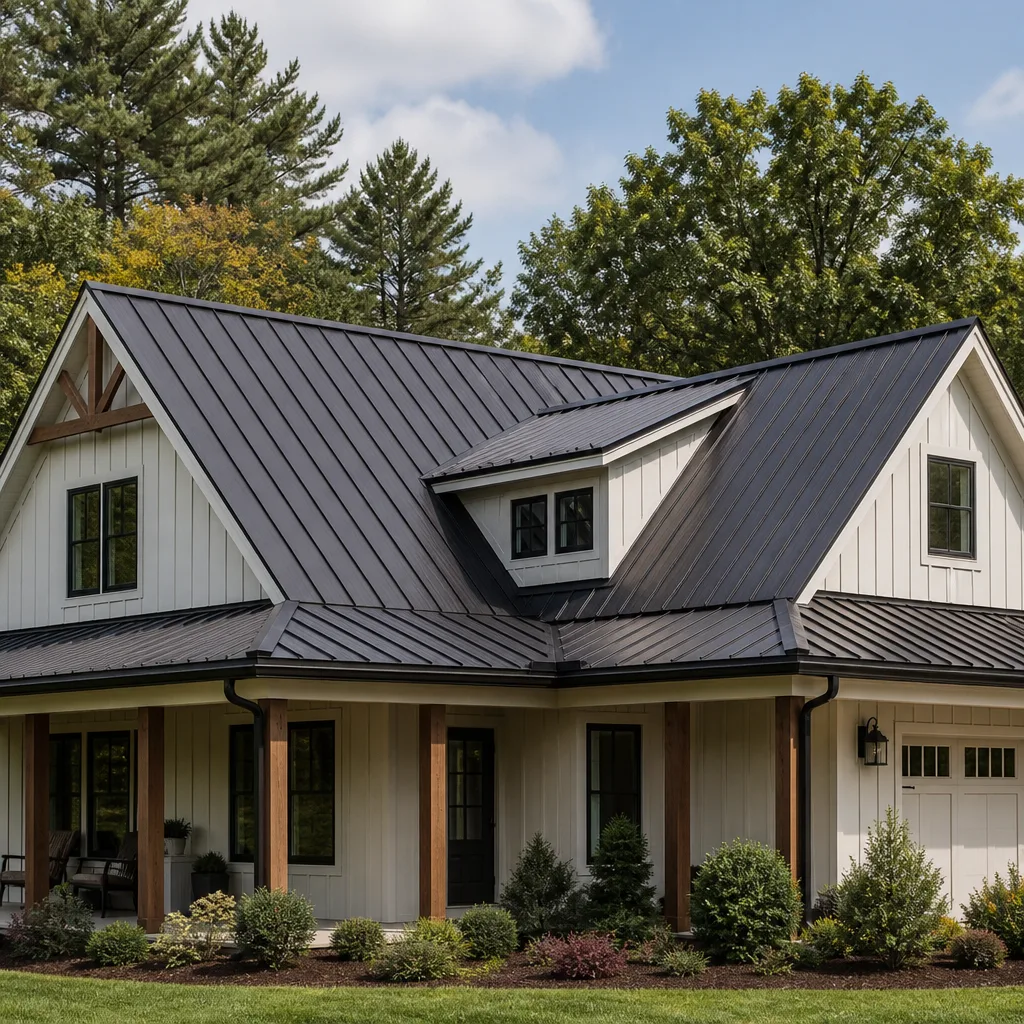 Metal roofing
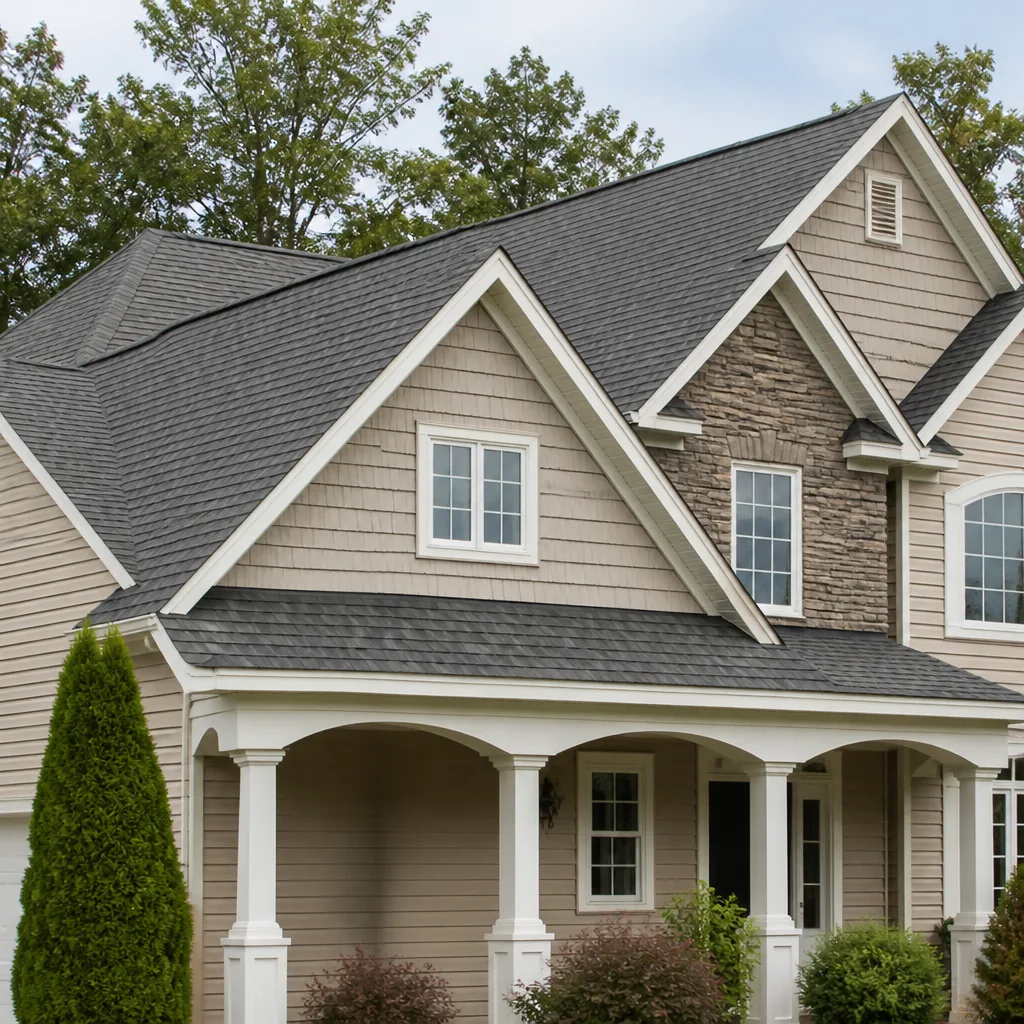 Architectural shingles
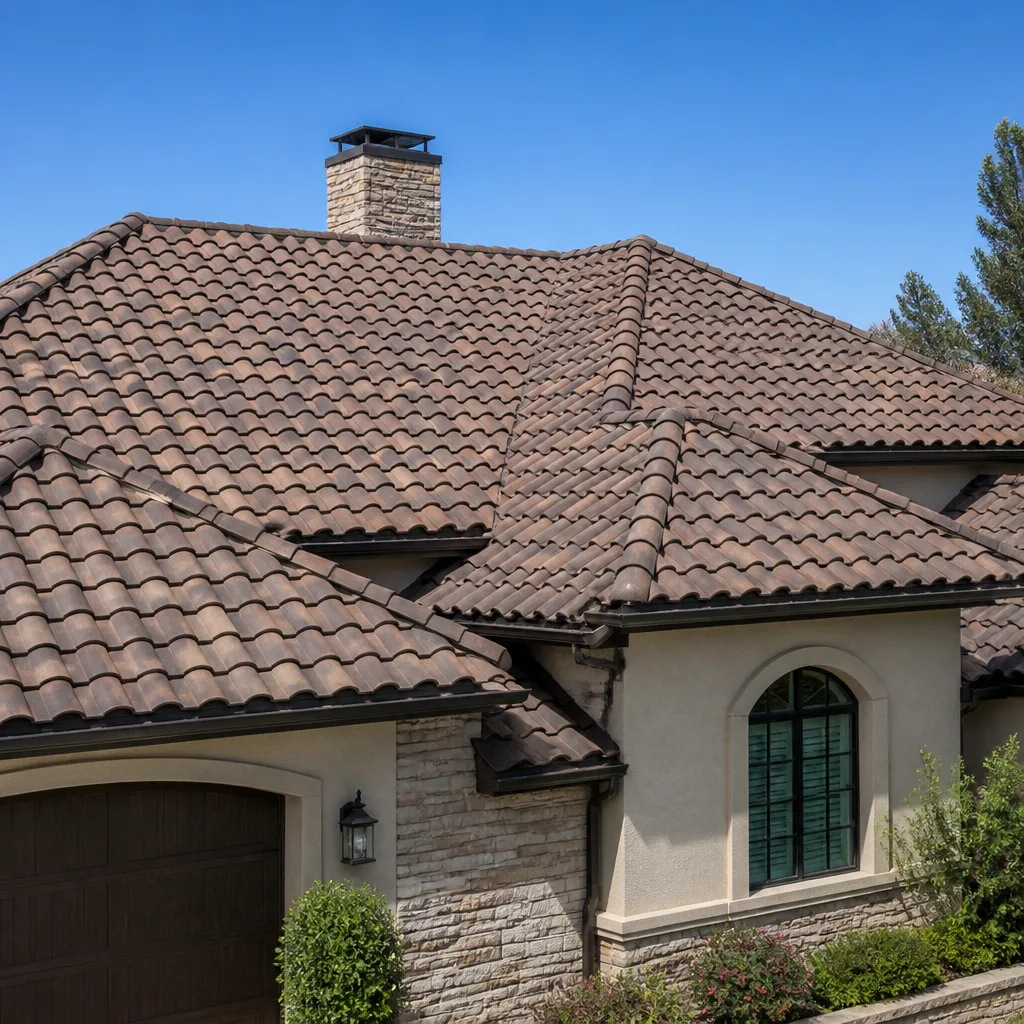 Tile roofing
 GAF
GAF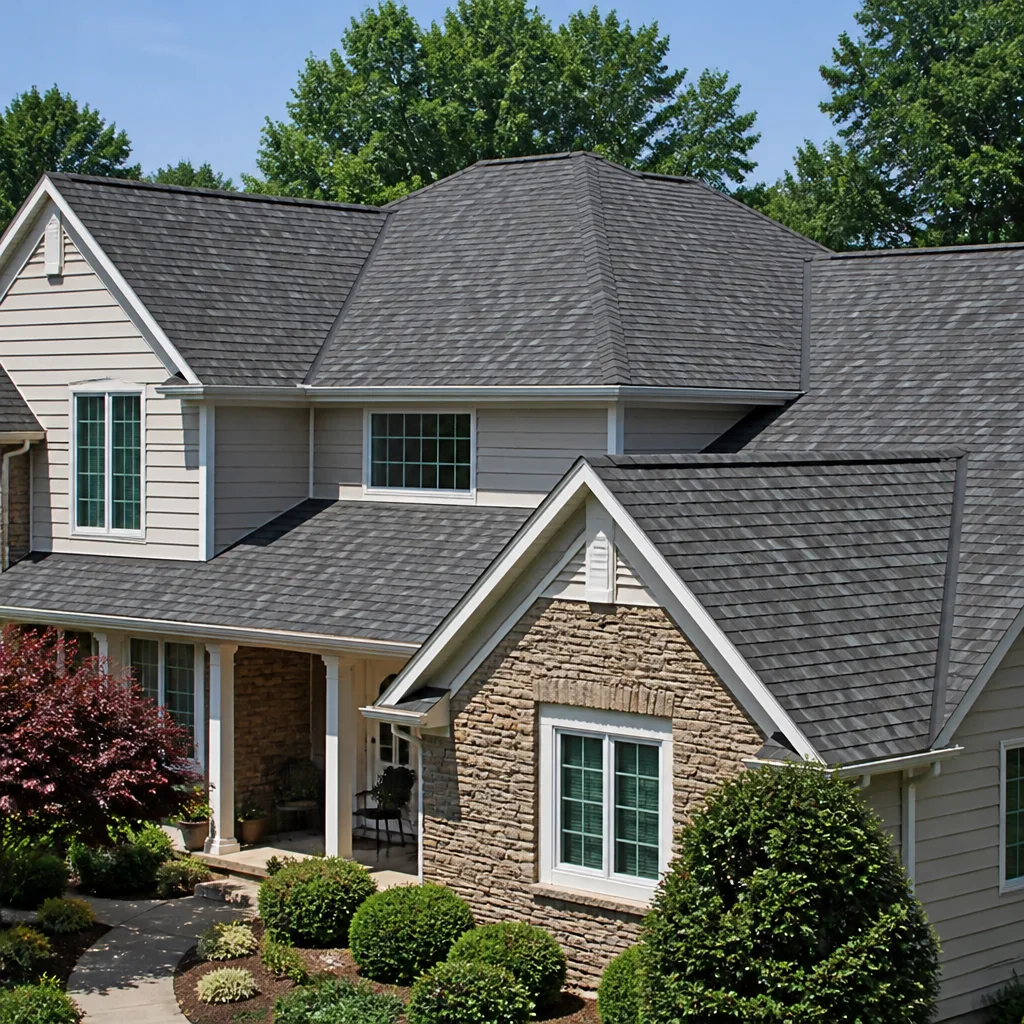 Owens Corning
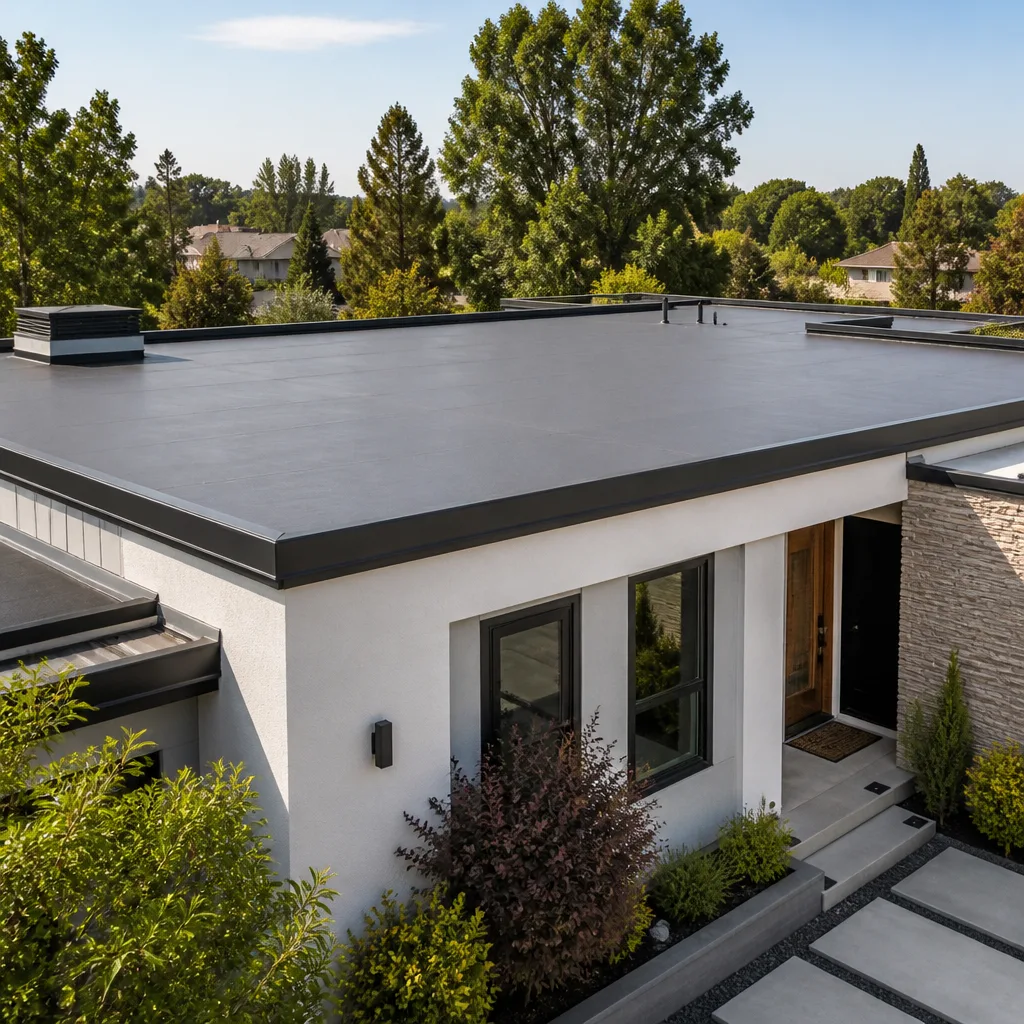 Flat & low-slope
Free roof inspection with deck photos before we talk money - GAF and Owens Corning certified installation
How to Hire a Roofing Contractor in Tampa: A Step-by-Step Guide
Florida law requires roofing contractors to carry a state-issued license, yet the Hillsborough County Contractor Licensing Board fields hundreds of complaints annually against operators who worked without one. The license number printed on a business card is easy to fake. Verifying it takes about 90 seconds on the DBPR website, and most homeowners in Tampa never do it. This guide walks you through a vetting sequence that filters out unlicensed operators and storm-chasers before they ever set foot on your roof. You’ll learn exactly what to check, what to ask, and what to put in writing.
Quick Answer
To hire a roofing contractor in Tampa, verify their Florida state license on the DBPR website, call their insurer directly to confirm active coverage, and require a written line-item estimate before any work starts. The estimate must list material brands, underlayment type, disposal method, and a payment schedule tied to completed work. Never hire a door-to-door roofer in the weeks after a storm without running this full sequence.
Styles & brands we work with
Table of Contents
- Step 1: Verify the Florida Roofing License in Real Time
- Step 2: Call the Insurer Directly – Don’t Accept a Certificate of Insurance
- Step 3: What a Legitimate Written Estimate Must Contain
- Step 4: Tampa-Specific Red Flags That Signal a Storm-Chaser
- Step 5: Structure a Payment Schedule That Protects You
- Step 6: Get the Guarantee in Writing
- Step 7: Understand Your Material Options Before You Sign
Step 1: Verify the Florida Roofing License in Real Time
Every roofing contractor operating in Tampa must hold a license issued by the Florida Department of Business and Professional Regulation. This is not optional. The DBPR maintains a searchable online database that shows the license status, issue date, expiration date, and any complaints or disciplinary actions filed against the license holder. The search takes less than two minutes.
Here is the exact sequence we recommend:
- Ask the contractor for their license number. A legitimate operator will give it to you on the spot. If they hesitate or offer a number that starts with “pending,” end the conversation.
- Go to the DBPR website and select “Verify a License” from the main menu.
- Enter the license number. The database shows whether the license is active, inactive, suspended, or revoked.
- Check the license class. Florida issues several roofing license classes, and the class determines what the contractor is legally allowed to do.
The license class matters more than most Tampa homeowners realize. A Certified Roofing Contractor (CCC) license allows work anywhere in Florida. A Registered Roofing Contractor (RC) license is limited to specific counties or municipalities. If a contractor holds only an RC license, confirm that their registration includes Hillsborough County. A Specialty Roofing Contractor (SRC) license covers a narrower scope, often limited to specific roof types. Before you hire anyone, verify that the license class matches the work you need done.
We have seen Tampa homeowners hand over deposits to operators whose licenses were revoked years earlier. The DBPR database is the single most reliable tool you have to prevent that. Use it every time, even if the contractor came from a neighbor’s referral.
Step 2: Call the Insurer Directly, Don’t Accept a Certificate of Insurance
Most homeowners know to ask for a certificate of insurance. Few know that a certificate is a snapshot, not a guarantee. The policy can be cancelled the day after the certificate is printed. When a roofer’s crew gets hurt on your property and the policy is inactive, the claim can fall on your homeowner’s insurance. That is not a risk worth taking in Tampa, where steep pitches and summer heat make roofing work genuinely dangerous.
The verification step that most people skip is simple: call the insurance company directly. The certificate lists the insurer’s name and policy number. Pick up the phone and confirm with the insurer that the policy is active on that day.
What to ask the insurer:
- Is the general liability policy active as of today?
- What are the coverage limits? For roofing work in Tampa, require at least $1 million in general liability coverage.
- Does the contractor carry workers’ compensation insurance? In Florida, roofing contractors with employees are generally required to carry it. If the contractor claims an exemption, ask for the exemption certificate and verify it with the state.
A contractor who refuses to let you verify insurance is telling you something important. Walk away. The five minutes this phone call takes is cheap compared to the alternative. When we dispatch technicians from Brennan Roofing Co Tampa, every crew member is background-checked and covered under active policies, and we will give you the information to verify that before anyone climbs a ladder.
Step 3: What a Legitimate Written Estimate Must Contain
A verbal quote is worth the paper it is not printed on. In Tampa’s post-storm market, the written estimate is the document that protects you when a contractor tries to raise the price halfway through the job. It is also the document that separates serious operators from the ones who disappear when the first problem shows up.
Every legitimate written estimate in Tampa should contain these line items:
- Material specifications: The exact shingle brand and product line, not just “architectural shingles.” For example, “GAF Timberline HDZ, color: Charcoal.” If the estimate says “roofing materials” without a brand and grade, ask for a revision.
- Underlayment type: Synthetic or felt, with the specific product name. Synthetic underlayment costs more but performs better in Tampa’s wet season.
- Flashing and drip edge: Flashing is the metal that seals roof penetrations and valleys. Drip edge directs water away from the fascia. Both must be itemized. If they are missing from the estimate, ask whether the contractor plans to reuse old materials.
- Decking replacement cost per sheet: Rotted wood decking is common in Tampa homes with older roofs. The estimate should state the per-sheet replacement price so you are not surprised if the crew finds rot after tear-off.
- Disposal method and cost: Who hauls away the old roof? Is a dumpster included? This should be a line item, not a handshake agreement.
- Payment schedule: Never a full upfront payment. More on this below.
- Start date and estimated duration: In writing. Not “soon” or “next week.”
At Brennan Roofing Co Tampa, every job begins with a written price before any work starts. The number goes on paper, and it does not move at the door. If a contractor in Tampa will not put a full line-item estimate in writing, that is not negotiation. That is a warning.
Step 4: Tampa-Specific Red Flags That Signal a Storm-Chaser
Tampa has more storm-chasing contractors per capita than nearly any metro in Florida. Hurricanes and summer thunderstorms produce a steady pipeline of damaged roofs, and out-of-town operators follow the storms. These crews work a simple playbook: show up fast, collect deposits, do fast work, and leave before the problems surface. By the time the homeowner files a complaint, the company has changed its name or moved to the next storm zone.
These are the red flags that matter in Tampa specifically:
- Door-to-door solicitation within days of a storm: Legitimate local roofers in Tampa are busy after a storm. They do not need to knock on doors. A contractor who appears at your door within 72 hours of a hail event or high-wind storm is likely following the damage, not serving the community.
- Requests for full payment upfront: This is the clearest signal of an operator who does not intend to finish the job. No legitimate roofing contractor in Tampa needs 100 percent of the payment before work begins.
- Volunteering to “handle the insurance claim”: A contractor who offers to negotiate directly with your insurer may be planning to inflate the claim. Insurance fraud in Florida roofing is a real problem, and homeowners can be implicated. Work with your insurer directly and use the contractor’s estimate as documentation.
- Out-of-state license plates and a P.O. box address: Ask where the company is physically located. If the answer is a mailbox, not a shop, walk away.
- High-pressure signing tactics: “This price is only good if you sign today” is a statement designed to prevent you from running the license and insurance checks we described above. No legitimate estimate in Tampa expires in 24 hours.
We have talked to Tampa homeowners who paid deposits to storm-chasers and never saw a crew again. The vetting sequence in this guide is built to make that outcome impossible. Run every contractor through every step, even when the roof is leaking and the pressure feels real.
Step 5: Structure a Payment Schedule That Protects You
The payment schedule is the most important part of the contract that most Tampa homeowners never read. A properly structured schedule ties your money to completed work, which means the contractor has a financial incentive to finish each phase before you release the next payment.
Here is a payment structure that protects you at each phase:
- Deposit: 10 to 20 percent maximum. This covers material ordering and scheduling. In Tampa, some contractors ask for more. Do not give it. A deposit above 20 percent is a red flag, especially from an operator you have not fully vetted.
- Second payment: After tear-off and dry-in. Once the old roof is off and the underlayment is in place, the job is at the halfway point. Release the second payment only after you have confirmed the dry-in is complete and the property is protected from weather.
- Final payment: After final inspection and cleanup. The final 10 to 20 percent should not be released until the roof is complete, the site is clean, and you have walked the job with the contractor. If hail or wind has damaged your roof, use Roof Inspection in Tampa services to verify the work before final payment.
The one contractual clause that matters most if a dispute arises is a lien waiver. A lien waiver is a document stating that the contractor has paid all subcontractors and suppliers for the work performed on your property. Without it, an unpaid supplier can file a mechanic’s lien against your home even after you have paid the general contractor in full. Require a partial lien waiver with each payment and a final lien waiver before you release the last check.
At Brennan Roofing Co Tampa, the payment schedule is written into the estimate before any work begins. You know exactly what you owe, when you owe it, and what has to happen before each payment is due. That is the Garrison Standard, and it applies to every job we do in Tampa.
Step 6: Get the Guarantee in Writing
A verbal guarantee is not a guarantee. It is an empty phrase. The roofing industry is full of contractors in Tampa who promise to “stand behind their work” and then vanish when a repair fails six months later. If a contractor will not put the guarantee in writing, assume there is no guarantee.
A legitimate written guarantee should specify three things:
- What is covered: Workmanship defects only, or materials too? Be specific. “We guarantee the work” is not specific.
- How long the coverage lasts: A number in months or years, not “as long as you own the home” unless that phrase is in writing and signed.
- What happens if something fails: Who pays for the repair visit? Is the return trip free? What is the timeline for the contractor to respond?
Our 365-Day Done Right Promise is written into every contract we sign in Tampa. If a repair or installation is not done right within one full year, we make it right at no charge. That includes a free second visit if a repair fails within the guarantee period. We do not ask you to negotiate for this. It is the standard, and it is on paper.
Every roof we install or repair in Tampa comes with this written guarantee. If a contractor’s guarantee exists only in a sales pitch, ask them to write it down. If they refuse, you have your answer.
Step 7: Understand Your Material Options Before You Sign
Tampa’s climate punishes roofs. Intense sun, high humidity, summer thunderstorms, and the occasional hurricane create conditions that cheap materials cannot survive. The material choice you make in the estimate phase determines how the roof performs for the next 15 to 25 years. You do not need to become a roofing expert, but you do need to understand the basic options.
Three material lines that perform well in Tampa’s climate, and what to know about each:
- GAF: The Timberline HDZ line is widely used in Tampa and offers a good balance of cost and storm performance. GAF shingles carry strong wind ratings, which matter in a city that sees hurricane-season gusts.
- CertainTeed: Their Landmark line is another common choice for Tampa homes. CertainTeed’s reputation is built on consistency across product runs, which matters when a homeowner wants a roof that looks uniform from one end to the other.
- Owens Corning: Their Duration line features a fabric-reinforced nailing strip that helps shingles hold in high winds. In a market like Tampa, where wind-driven rain is a regular occurrence, that reinforcement is worth understanding.
The right material depends on your home’s pitch, your budget, and how long you plan to stay in the house. A contractor should explain the trade-offs in plain language, not push a single option because they have inventory to clear. At Brennan Roofing Co Tampa home, we install materials from GAF, CertainTeed, Owens Corning, IKO, Atlas, and Tamko, and we will show you the differences in cost and performance before you decide. The material choice is yours, not the contractor’s.
Common Mistakes to Avoid
- Skipping the DBPR license check because “the business card looked official.” Printing a license number on a card costs nothing. Verifying it takes 90 seconds. The database exists precisely because cards are easy to fake.
- Accepting a certificate of insurance without calling the insurer. Certificates represent a moment in time. Policies get cancelled. The phone call is the only verification that matters.
- Signing an estimate that lists “roofing materials” without brands or grades. That vagueness is an invitation for the contractor to install the cheapest product they can source. You should know the exact shingle on your roof before it arrives.
- Paying more than 20 percent upfront. A large deposit shifts all the risk onto you. If the contractor walks, you have lost that money. Keep the deposit small and tie the rest to completed work.
- Hiring a door-to-door roofer in the first week after a storm. The storm-chaser playbook targets urgency. The best defense is slowing down and running the full vetting sequence even when the damage feels urgent.
- Releasing final payment before inspecting the completed job. Walk the roof area with the contractor, check the flashing, the drip edge, and the cleanup. Once the final check clears, your leverage shrinks.
- Signing a contract without a lien waiver clause. An unpaid subcontractor can file a lien against your home even if you paid the general contractor in full. This is a Florida-specific risk that too few Tampa homeowners know about.
See the difference
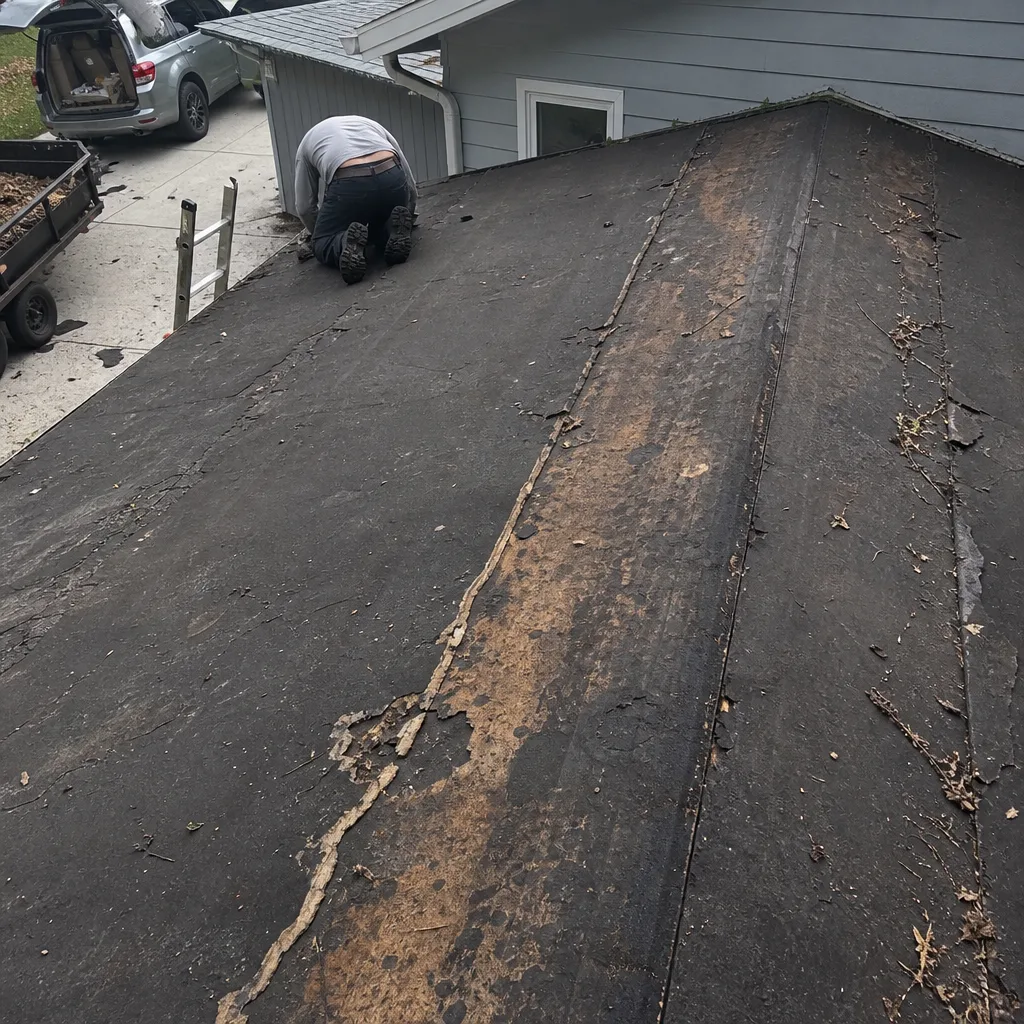 Before
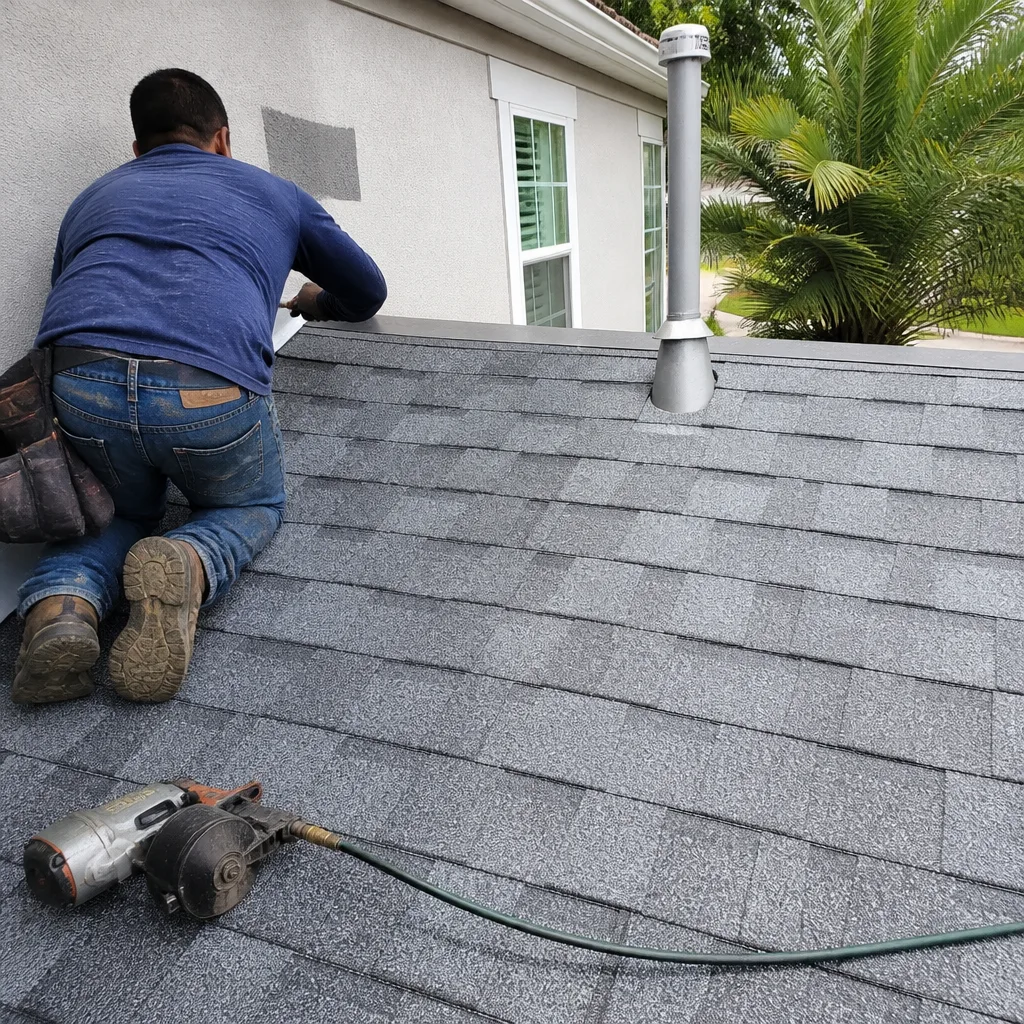 After
After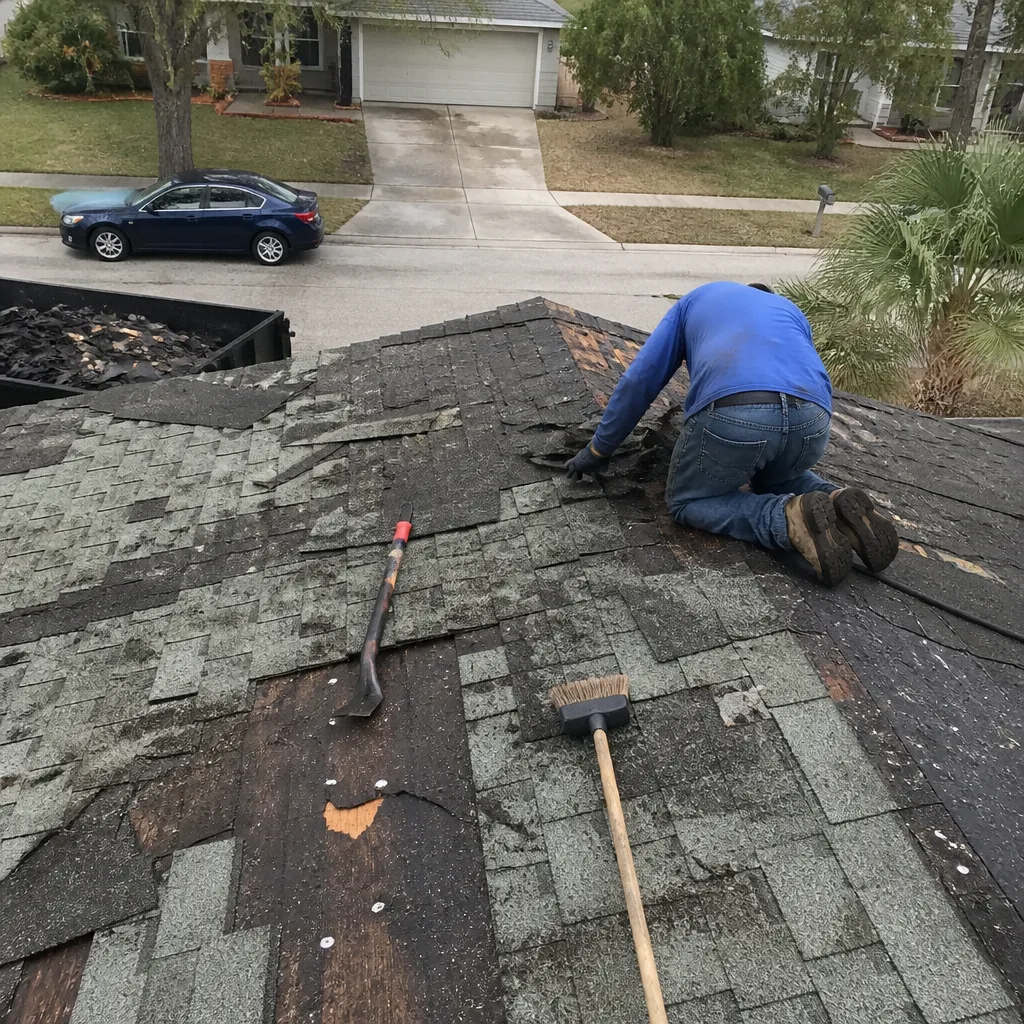 Before
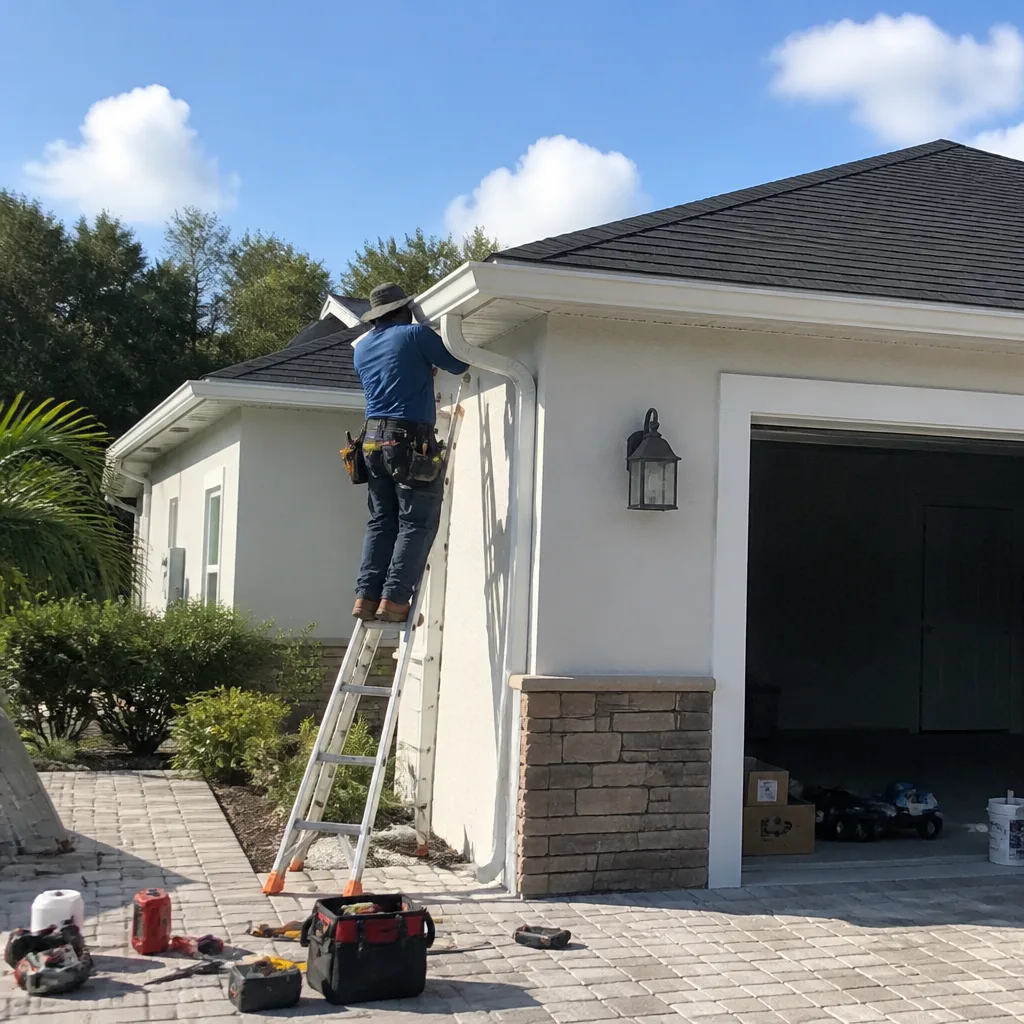 After
After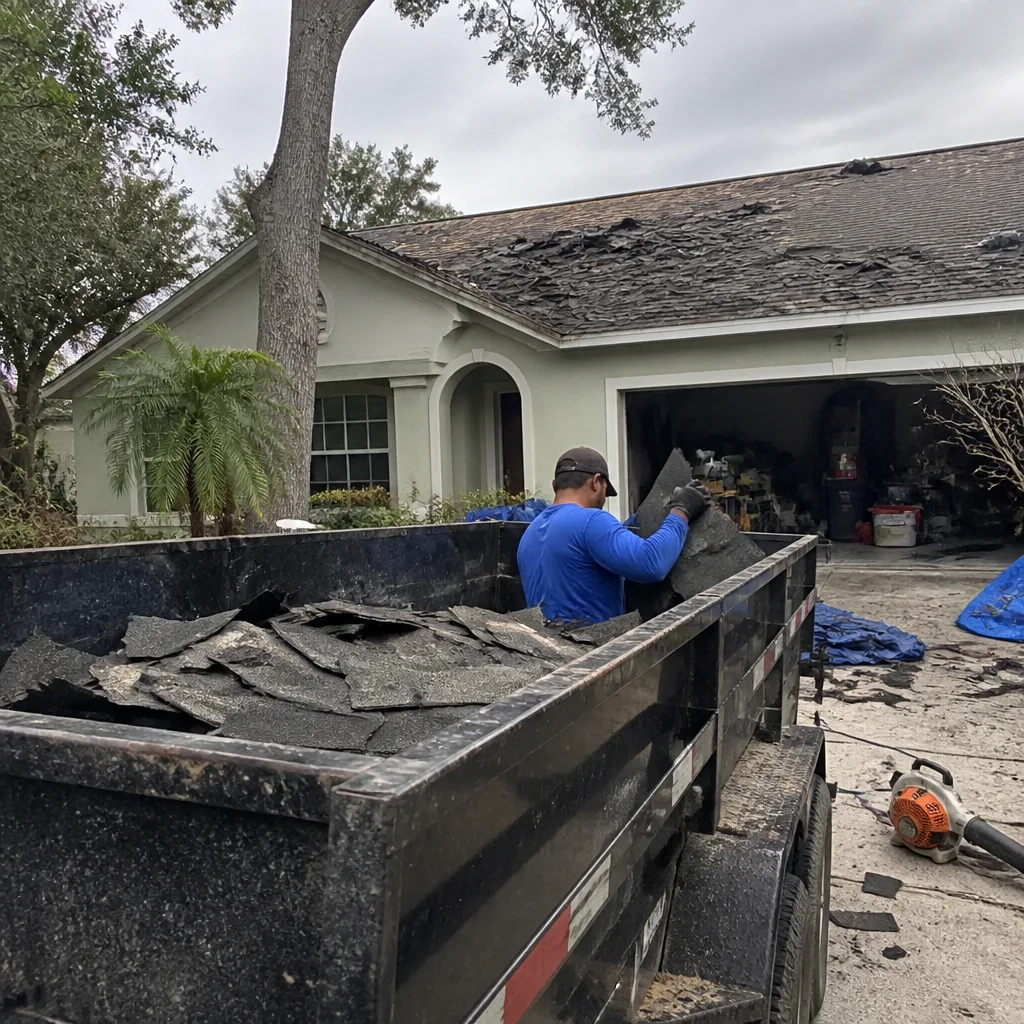 Before
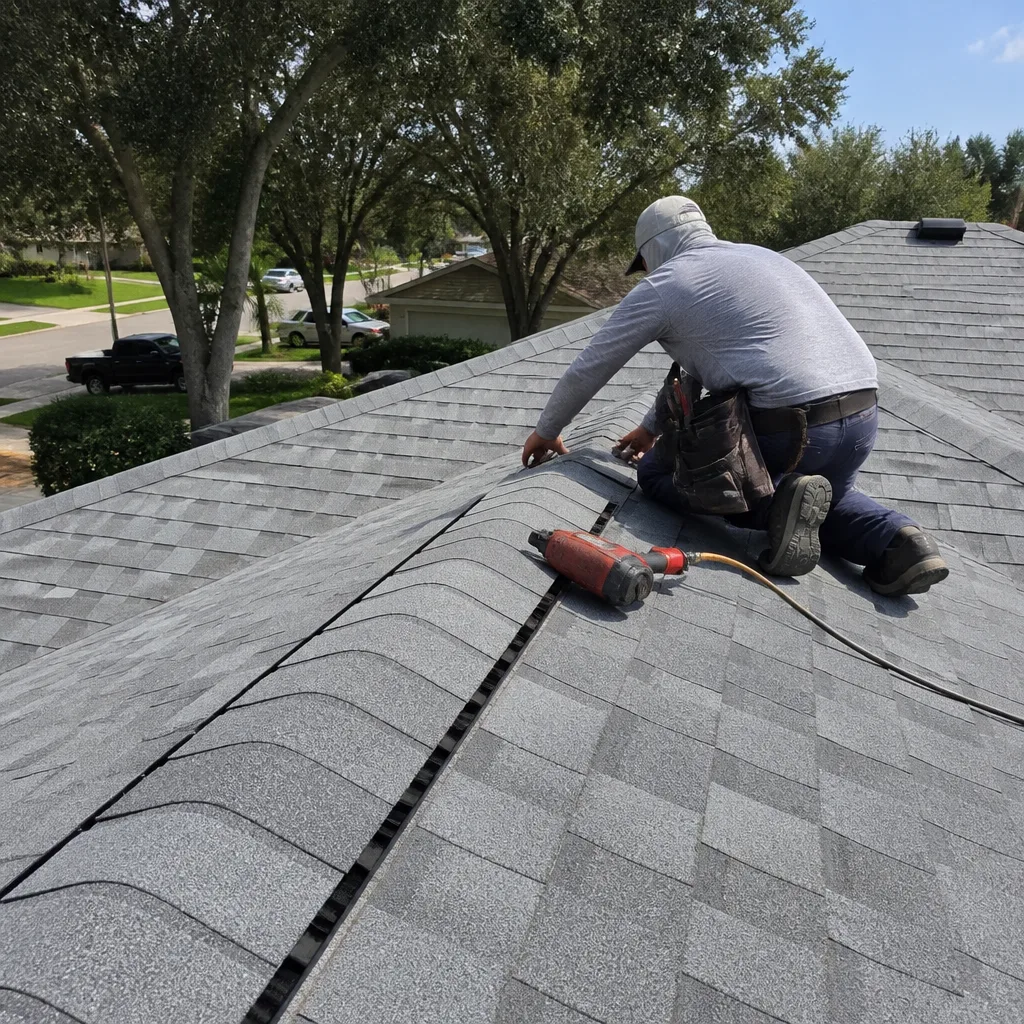 After
AfterWhen to Call a Professional
Some roofing problems are obvious. A leak that drips through the ceiling during a summer storm, missing shingles after a wind event, or granules filling the gutters are signs that the roof needs attention. Other problems are less visible until they have already caused damage. If your roof is more than 15 years old, or if you see dark streaks, sagging, or daylight through the attic boards, call a professional before the problem spreads. Walking a roof in Tampa’s summer heat is dangerous, and spotting early failure points takes trained eyes. Roof Repair in Tampa work should never be postponed once you suspect a leak. Brennan Roofing Co Tampa offers free estimates in Tampa, call (850) 750-9193 to schedule one.
Frequently Asked Questions
A full roof replacement in Tampa typically runs between $3.50 and $6.50 per square foot installed, which puts most homes in the $9,000 to $18,000 range depending on size, pitch, material grade, and decking condition. See our Roofing Cost Breakdown: The Tampa Homeowner’s Reference for 2026 for detailed pricing factors. Simple asphalt shingle replacements on single-story homes trend toward the lower end, while steep-pitch homes, tile, or heavy storm damage push toward the higher end. Call (850) 750-9193 for an exact quote, estimates are free.
Most asphalt shingle replacements on single-family homes in Tampa take one to three days from tear-off to final cleanup. Tile roofs, steep pitches, or extensive decking replacement can extend the job to five days or more. Weather is the wildcard, and Tampa’s summer storms can pause a job mid-afternoon. The timeline should be written into your estimate before work starts.
Yes. Roof replacements in Hillsborough County require a building permit, and the contractor should handle the permit application and the final inspection. Learn more in our guide to Roofing Permits, Codes & Inspections in FL: What You Need to Know. A contractor who offers to skip the permit to save you money is asking you to accept an unpermitted roof, which can create problems when you sell the home or file a future insurance claim. Confirm in writing who pulls the permit before you sign.
Storm damage from wind or hail is typically covered by a standard Florida homeowner’s policy, but claims are evaluated by your insurer, not the roofer. Document the damage with photos, file the claim yourself, and use the contractor’s written estimate as supporting evidence. Be cautious of any contractor who volunteers to negotiate directly with your insurer before you have filed the claim yourself.
Paying a large deposit before verifying the license and insurance is the mistake we see most often in Tampa. The storm-chaser business model depends on collecting deposits fast and disappearing before the homeowner runs the checks. A 10 to 20 percent deposit is standard. Anything more is a reason to slow down, even when the roof is actively leaking.
Yes. A full tear-off is loud and disruptive, but most Tampa homeowners stay in the house during the one to three days the work takes. The crew will need access to your driveway and may need power for equipment, so plan for vehicles to be parked away from the house. If you work from home, expect noise throughout the day. Call (850) 750-9193 to ask about your specific situation.
The Bottom Line
Hiring a roofing contractor in Tampa is not about finding the lowest bid. It is about filtering out operators who will take your deposit and leave you with a failed roof and no recourse. Run the DBPR license check. Call the insurer directly. Require a written line-item estimate with material brands, disposal method, and a payment schedule tied to completed work. Walk away from door-to-door solicitors after storms, full upfront payments, and verbal guarantees. The standard is discipline: written price before work starts, licensed and insured crews, and a written guarantee that names a specific coverage period. In Tampa, that standard has a name: the Garrison Standard.
Written by Travis Oakley, Owner at Brennan Roofing Co Tampa, serving Tampa since 2000.