
Last updated October 17, 2026
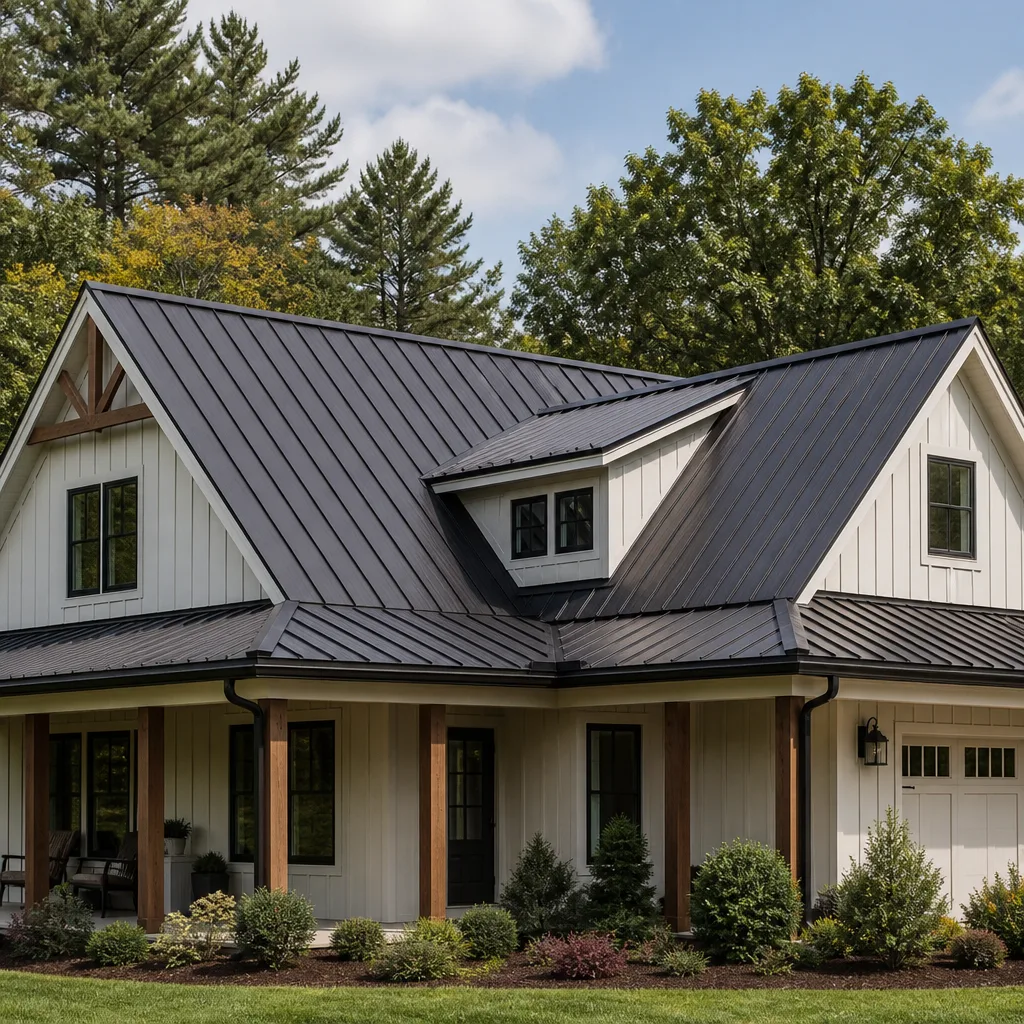 Metal roofing
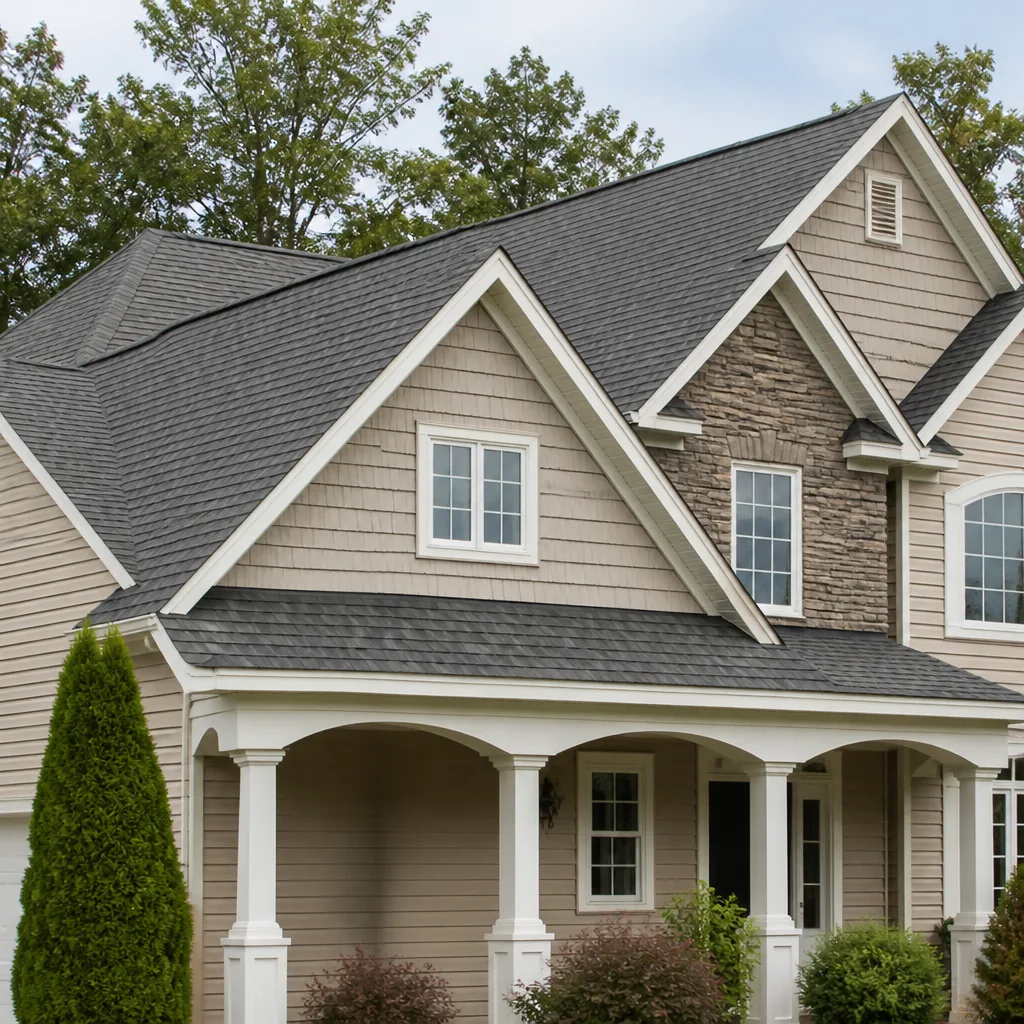 Architectural shingles
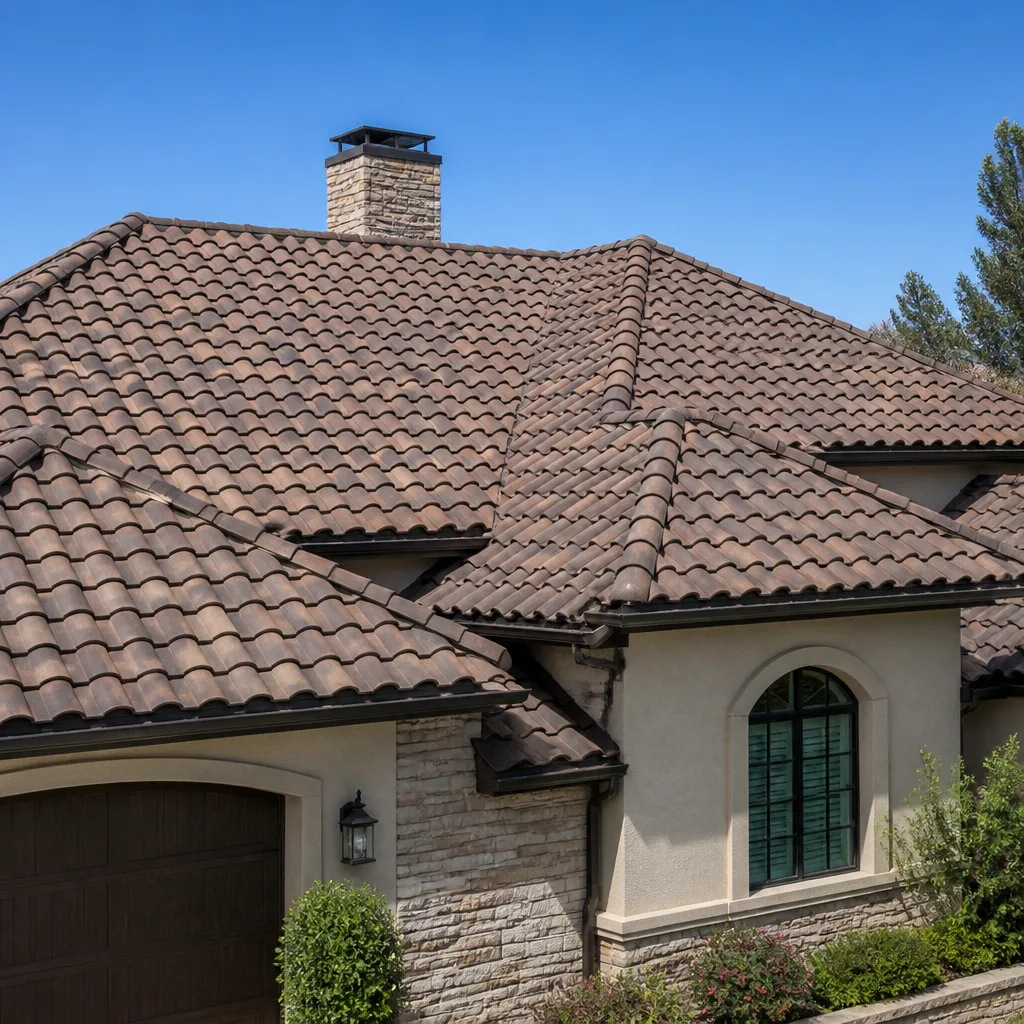 Tile roofing
 GAF
GAF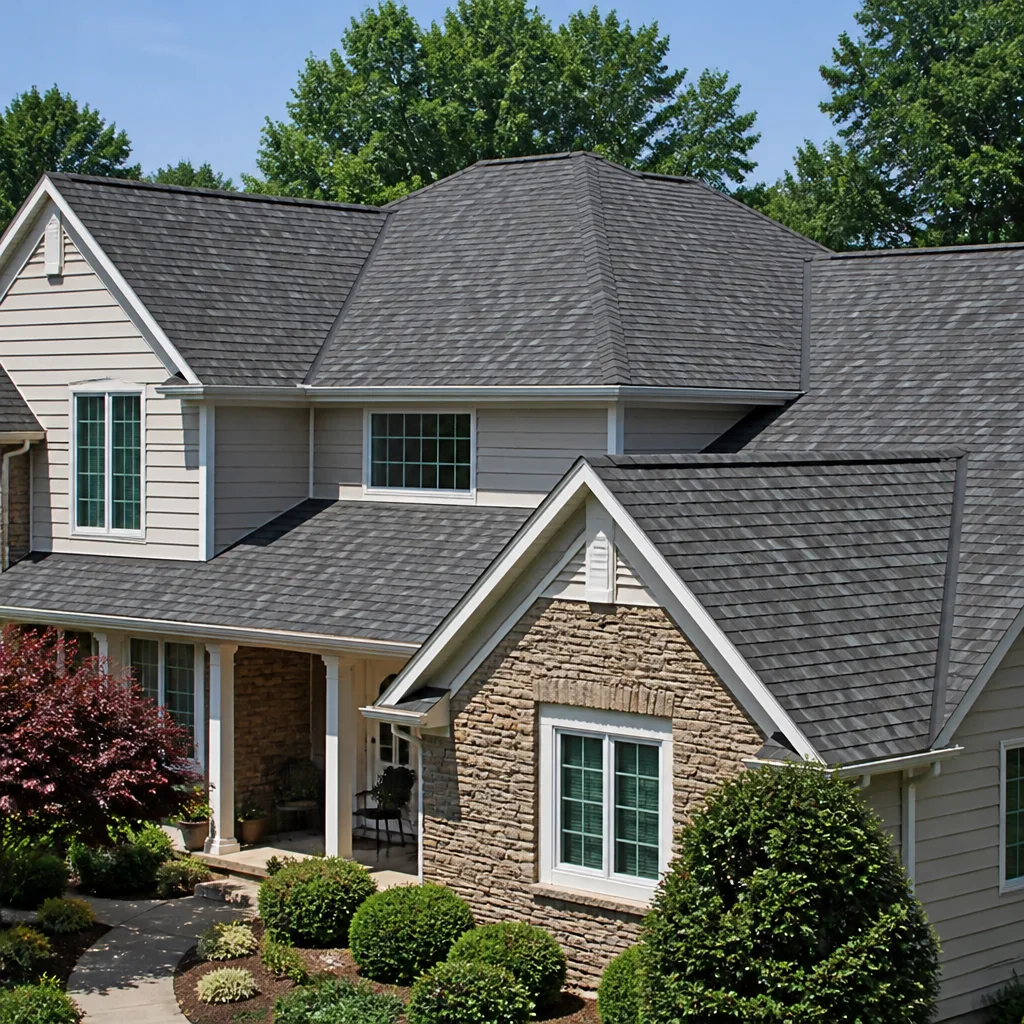 Owens Corning
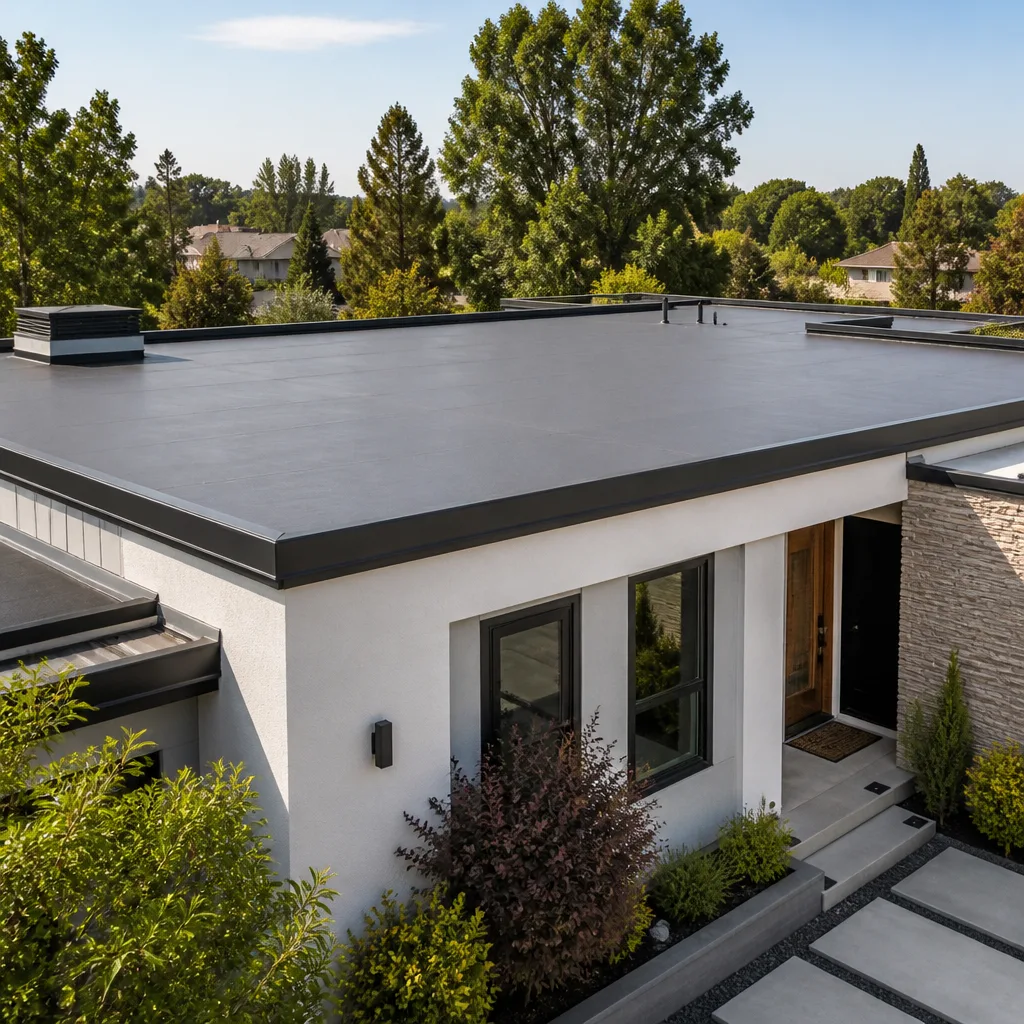 Flat & low-slope
Free roof inspection with deck photos before we talk money - GAF and Owens Corning certified installation
The Complete Guide to Roofing in Tampa
Tampa receives an average of 246 sunny days per year, but UV degradation, not storm damage, is the number-one cause of premature roof failure on local homes. Most homeowners are preparing for the wrong enemy. This guide covers what actually wears out a roof in Tampa, which materials hold up under Hillsborough County wind loads, what permits cost and when they’re required, and what you should expect to pay for a roof replacement in 2026. For more guides & resources, visit our blog. We’ll also show you how to read an estimate line by line so you can compare bids that look identical on the surface but aren’t.
Quick Answer
Roofing in Tampa means choosing materials rated for high UV exposure, standing humidity, salt air, and hurricane-force wind loads, then having them installed under Florida Building Code permits with inspections at specific stages. A full roof replacement in Tampa for a typical 1,800 – 2,400 square foot single-story home runs between $8,500 and $22,000 depending on material, pitch, and decking condition. The permit and inspection process adds roughly $150 to $500 in fees and typically takes one to three weeks from application to final approval.
Styles & brands we work with
Table of Contents
- How Tampa’s Climate Destroys Roofs Differently Than Anywhere Else
- Miami-Dade NOA Ratings and What They Mean for Hillsborough County
- Roofing Materials That Work in Tampa: Costs and Tradeoffs
- Tampa Permits and Inspections: The Full Sequence
- Real Installed Costs in Tampa for 2026
- How to Read a Roofing Estimate Line by Line
- Replacement vs. Repair: How to Decide
- Common Mistakes to Avoid
How Tampa’s Climate Destroys Roofs Differently Than Anywhere Else
Tampa sits in a climate band that punishes roofing materials in three ways at once. First, the UV index here averages between 8 and 11 for much of the year, which is classified as “very high” to “extreme.” That ultraviolet radiation breaks down the chemical bonds in asphalt shingles, causing granule loss, brittleness, and cracking. Second, Tampa’s average annual rainfall of roughly 50 to 52 inches, combined with standing humidity that rarely drops below 60 percent, creates conditions where algae, moss, and mold thrive on roof surfaces. Third, homes within a few miles of Tampa Bay or the Gulf get salt-laden air that accelerates corrosion on metal flashing, fasteners, and any exposed metal component.
We’ve inspected roofs in Carrollwood and Westchase that were twelve years old and looked worse than twenty-year-old roofs in inland cities like Lakeland or Ocala. The difference is the combination of UV and moisture. UV breaks the shingle surface down, and moisture gets into those micro-fractures, expanding and contracting with temperature swings. Over time, the shingle loses its ability to shed water, and the decking beneath starts to rot.
What this means in practical terms: a standard three-tab asphalt shingle rated for 20 to 25 years in a temperate climate may realistically last 12 to 15 years in Tampa before needing attention. Architectural shingles, which have a thicker base mat and more asphalt saturation, typically last 18 to 22 years here. Metal, tile, and slate hold up significantly longer, but each has tradeoffs we’ll cover below.
Miami-Dade NOA Ratings and What They Mean for Hillsborough County
You’ll see the phrase “Miami-Dade NOA rated” on roofing product spec sheets, and it matters for Tampa homes even though we’re across the state from Miami-Dade County. NOA stands for Notice of Acceptance. It’s a product approval issued by Miami-Dade County after a material or system passes wind uplift testing, impact testing, and water infiltration testing that exceeds what most other jurisdictions require. Because Miami-Dade has the strictest building product approval process in the country, manufacturers submit their best products for testing there, and the NOA number becomes a shorthand for “this product has been independently tested to withstand serious wind loads.”
Hillsborough County falls within Florida’s wind-borne debris region, which means roof coverings must be rated for the wind speeds associated with our location. Under Florida Building Code, most of Tampa falls into a risk category that requires roof coverings to meet the wind uplift standards of the code. Products with a Miami-Dade NOA generally exceed those minimums, which is why we prefer them. A roof installed with NOA-rated materials and the correct fastening pattern for the product’s specific NOA approval is materially less likely to peel off in a named storm.
Here’s the catch: the NOA approval includes specific installation requirements. Nail type, nail pattern, number of fasteners per shingle, underlayment type, and even the specific adhesive used at seams are part of the approval. A shingle can carry an NOA number, but if the installer ignores the fastening pattern, the NOA is meaningless. When you’re comparing bids, ask the contractor to confirm in writing that the installation will follow the manufacturer’s NOA-specified fastening schedule. If they can’t answer that question clearly, that’s a red flag. For help vetting contractors, see our How to Hire a Roofing Contractor in Tampa: A Step-by-Step Guide.
Every roof Brennan Roofing Co Tampa installs follows the manufacturer’s published NOA requirements. It’s not optional for us. The Garrison Standard includes that as a baseline, and it’s written into every contract we issue.
Roofing Materials That Work in Tampa: Costs and Tradeoffs
Tampa homeowners have five realistic roofing material options: architectural asphalt shingles, metal (standing seam or metal shingle), concrete or clay tile, flat/low-slope membrane systems, and synthetic slate or shake composites. Each performs differently under Tampa’s UV, moisture, and wind conditions.
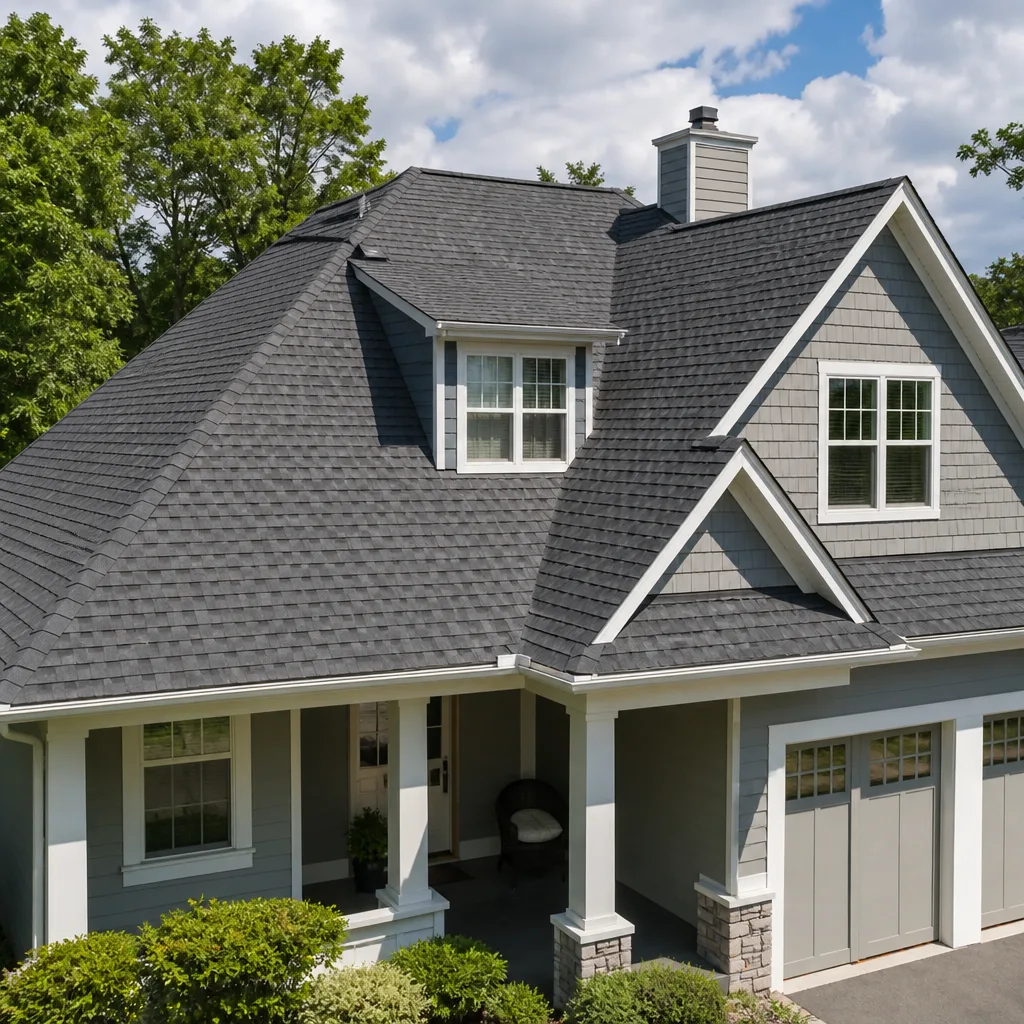
Architectural Asphalt Shingles
Architectural shingles are the default for most Tampa homes. They’re thicker than three-tab shingles, carry higher wind ratings when installed to NOA spec, and cost far less than tile or metal. We typically install architectural shingles from Owens Corning, Atlas, and IKO because these manufacturers publish clear NOA-approved fastening schedules and their products hold up well to sustained UV exposure. Expect these to last 18 to 22 years in Tampa with proper ventilation. Material and labor for architectural shingles on a typical Tampa home runs $4.50 to $6.50 per square foot installed.
Standing Seam Metal
Standing seam metal roofs are the best-performing common roofing system for Tampa’s conditions. The aluminum or galvalume steel panels reflect more UV than asphalt, don’t support algae growth the way shingle granules do, and when installed with a ventilated air gap, they reduce attic heat load, which lowers cooling bills in July and August. The installed cost runs $12 to $18 per square foot, so a full replacement is two to three times the cost of shingles. But the lifespan, often 40 to 60 years with basic maintenance, means many Tampa homeowners will never replace the roof again. The fasteners are hidden in the seam, so there are no exposed screws to rust from salt air, which matters within a few miles of the Bay.
Concrete and Clay Tile
Tile roofs are common in parts of South Tampa and Davis Islands, and they perform very well against UV and salt air. The downside is weight: clay tile can weigh 600 to 1,100 pounds per square, which often requires structural reinforcement when retrofitting onto a home not originally designed for tile. Tile is also fragile to foot traffic, so any repair or inspection requires someone who knows how to walk a tile roof without cracking half the field. Installed costs for tile run $12 to $22 per square foot depending on whether it’s concrete or clay and whether the roof is high-pitch or low-pitch.
Flat and Low-Slope Membrane Systems
Mid-century homes in neighborhoods like Temple Terrace and parts of Seminole Heights often have low-slope roof sections that can’t take shingles or tile. These sections need either modified bitumen or single-ply TPO/PVC membranes. The material choice matters in Tampa: PVC performs best against standing water and the relentless moisture, while TPO reflects heat well but is more vulnerable to algae staining and seam failure over time. Membrane roofs in Tampa run $8 to $14 per square foot installed, with more frequent recoating and maintenance needs than pitched systems.
Tampa Permits and Inspections: The Full Sequence
Tampa roofing work falls under two jurisdictions depending on your property’s location: the City of Tampa Building Department or Hillsborough County Development Services. Either way, the Florida Building Code applies, and the permit process has real teeth. Here’s the sequence.
Step 1: Determine if a permit is required. Under Florida Building Code, a roof permit is required when the work involves replacing any portion of the roof covering, sheathing, or structural roof components. The repair exemption is narrow: you can replace a few shingles, a section of flashing, or seal a small leak without a permit as long as the repair area is less than one roofing square (100 square feet) and does not involve structural components. Anything beyond that requires a permit. If a contractor tells you a full reroof doesn’t need a permit, that’s not just wrong; the unpermitted work will surface during a home sale and can kill the transaction.
Step 2: Submit the permit application. The contractor submits a permit package that includes the product approvals (NOA or Florida Product Approval numbers), a roof plan showing slope, decking type, and fastening schedule, and evidence of contractor licensing and insurance. City of Tampa permit fees for a reroof typically run $150 to $400 depending on roof area. Hillsborough County fees are similar. The review usually takes three to ten business days.
Step 3: The first inspection (in-progress). After the old roof is torn off and before the new roof covering goes on, an inspector examines the decking, underlayment, and flashing details. If the decking is rotted or not code-compliant, the inspector will require replacement or repair before the roofing can proceed. This inspection is critical, and a contractor who resists scheduling it is cutting corners.
Step 4: The final inspection. After the roof covering is fully installed, the inspector checks fastening pattern, flashing terminations, underlayment exposure, and the overall installation against the approved plans. Only after this final inspection passes is the work legally complete and the permit closed.
Step 5: The permit is closed and recorded. A closed permit is your proof that the work was inspected and passed. Keep the permit number. It matters for insurance, resale, and any future roof claims.
Brennan Roofing Co Tampa pulls permits on every job that requires one. It’s not a courtesy; it’s part of The Garrison Standard. The permit goes in your name, the inspections happen, and the closed permit is yours to keep.
Real Installed Costs in Tampa for 2026
Here are the installed cost ranges we’re seeing in the Tampa market in 2026 for a typical 2,000 square foot single-story home with a 6/12 pitch roof. These figures include tear-off, disposal, underlayment, flashing, permit fees, and labor.
| Material | Installed Cost Range (2,000 SF roof) | Typical Lifespan in Tampa |
|---|---|---|
| Three-tab asphalt shingle | $7,500 – $10,000 | 12 – 15 years |
| Architectural asphalt shingle | $9,000 – $13,000 | 18 – 22 years |
| Standing seam metal | $24,000 – $36,000 | 40 – 60 years |
| Concrete tile | $20,000 – $30,000 | 40 – 70 years |
| Clay tile | $28,000 – $44,000 | 50 – 80 years |
| TPO/PVC membrane (low-slope) | $16,000 – $28,000 | 20 – 30 years |
Two factors drive Tampa’s pricing higher than the national average. First, the post-Ian contractor market created a labor premium that hasn’t fully settled. Experienced roofing crews in Hillsborough County command wages 20 to 30 percent higher than they did before 2022, and those costs show up in every bid. Second, Tampa code requires specific underlayment and fastening standards that inland markets don’t enforce, which adds material and labor cost on the front end. A roof that meets Florida Building Code wind uplift requirements costs more to install than the same shingle on a house in Georgia. That’s not a contractor markup; it’s the cost of building to the standard.
If you’re getting bids, expect a spread of 15 to 25 percent between the lowest and highest for the same material. That spread is usually explained by differences in decking replacement protocol, underlayment quality, fastener upgrades, and warranty depth, not profit padding. We’ll show you how to spot the difference below.
How to Read a Roofing Estimate Line by Line
Most roofing estimates in Tampa list the same broad categories: tear-off, decking, underlayment, roofing material, flashing, ventilation, and cleanup. The differences live inside those lines. Here’s how to read one critically.
- Tear-off line. Confirm it says “remove and dispose of existing roof down to decking” and includes dumpster or trailer fees. Some bids bury disposal as a separate line item or “incidental” charge. It should be explicit.
- Decking line. Look for a per-sheet replacement cost for any rotted or damaged plywood or OSB, typically $80 to $120 per 4×8 sheet installed in Tampa. If the bid doesn’t include a per-sheet price, you will be charged whatever they decide on the day they find rot. You want that number on paper before work starts.
- Underlayment line. This is a real difference-maker. Code-minimum underlayment is a single layer of #30 felt or synthetic. We install synthetic underlayment with a high-temp rating because Tampa attics routinely hit 130°F to 150°F in summer, and cheap felt degrades under sustained heat. Ask for the manufacturer and product name. If the bid says “underlayment included” without naming it, that’s a corner being cut.
- Fastening line. The estimate should state the fastener type, length, and pattern. For a NOA-rated installation, this is specified by the product approval. “Nails as needed” is not a fastening schedule.
- Flashing line. Flashing should be replaced, not reused. The bid should list new step flashing, pipe boots, and any wall or chimney flashing. Reusing old flashing is a short-term savings that usually becomes a leak within a few years in Tampa’s rain conditions.
- Ventilation line. The estimate should specify the type and number of vents or whether it includes a ridge vent. Tampa attics need real airflow; a reroof without addressing ventilation shortens the new roof’s life and keeps the attic hot enough to stress the shingle from underneath.
- Permit and inspection line. This should be a separate line item with the actual fee. If it’s missing, the contractor is either rolling it into the total without disclosure or not planning to pull a permit. Both are problems.
At Brennan Roofing Co Tampa, the written price you receive before any work starts includes every one of these line items, with specific product names and a fixed per-sheet decking price. There’s no change order at the door. That’s the discipline of The Garrison Standard, and it’s the same on every job we do in Tampa.
Replacement vs. Repair: How to Decide
The decision to repair or replace comes down to three questions. First, how old is the roof, and how much life does the remaining material have? Second, how widespread is the damage versus localized? Third, is the underlying decking and underlayment in condition to accept a repair, or is the failure structural?
If the roof is under ten years old and the problem is a single small leak caused by a punctured pipe boot or a piece of flashing that pulled loose, a repair makes sense. The repair cost in Tampa for a straightforward flashing or shingle repair typically runs $350 to $700, and a competent repair extends the roof’s life without touching the rest of the field. However, if the roof is 15 years old and you’re seeing granular loss across the south-facing slopes, multiple small leaks, or shingles lifting at the edges even in moderate wind, the roof is telling you it’s near the end. Patching shingles onto a failing roof is money spent twice.
We don’t push replacement when a repair is the right call. Our roof inspection process measures the actual condition of the decking, the underlayment, and the shingle granule coverage, then gives you a straight answer. If a repair makes sense, you’ll get the written price for that. If replacement is the honest answer, you’ll get that too. For a complete look at what a roof inspection in Tampa covers, see our page on Roof Inspection in Tampa. And for a deeper dive on repair costs and scenarios, visit Roof Repair in Tampa.
Common Mistakes to Avoid
- Skipping the permit. An unpermitted reroof in Tampa will surface at resale and can cost thousands to resolve retroactively. The seller either pays to bring the roof up to code and pass a late inspection, or the deal dies.
- Choosing a contractor by lowest bid without reading the line items. The lowest bid often assumes code-minimum underlayment, reuses existing flashing, and omits a per-sheet decking price. You find out the real cost on install day.
- Ignoring attic ventilation. A Tampa attic without proper airflow can hit 150°F, which cooks the shingle from below and halves its effective lifespan. Ventilation is part of the roofing system, not an add-on.
- Assuming all “impact-rated” materials are equal. Impact rating and wind rating are different tests. A shingle can pass impact testing for hail but fail the wind uplift standard your home requires. Confirm both the NOA number and the fastening schedule.
- Reusing old flashing. Flashing is cheap compared to the cost of the interior damage a failed flashing joint causes during a Tampa downpour. Replace it every time.
- Putting off a small leak. In Tampa’s humidity, a small leak breeds mold inside the attic and rots decking faster than most homeowners realize. A $400 flashing repair becomes a $2,500 decking and ceiling repair inside a year.
- Not asking who will actually be on your roof. Some Tampa companies sell the job and then subcontract the work to a crew they’ve never met. Ask if the technicians are employees of the company and whether they’re background-checked. You should know exactly who is on your roof.
See the difference
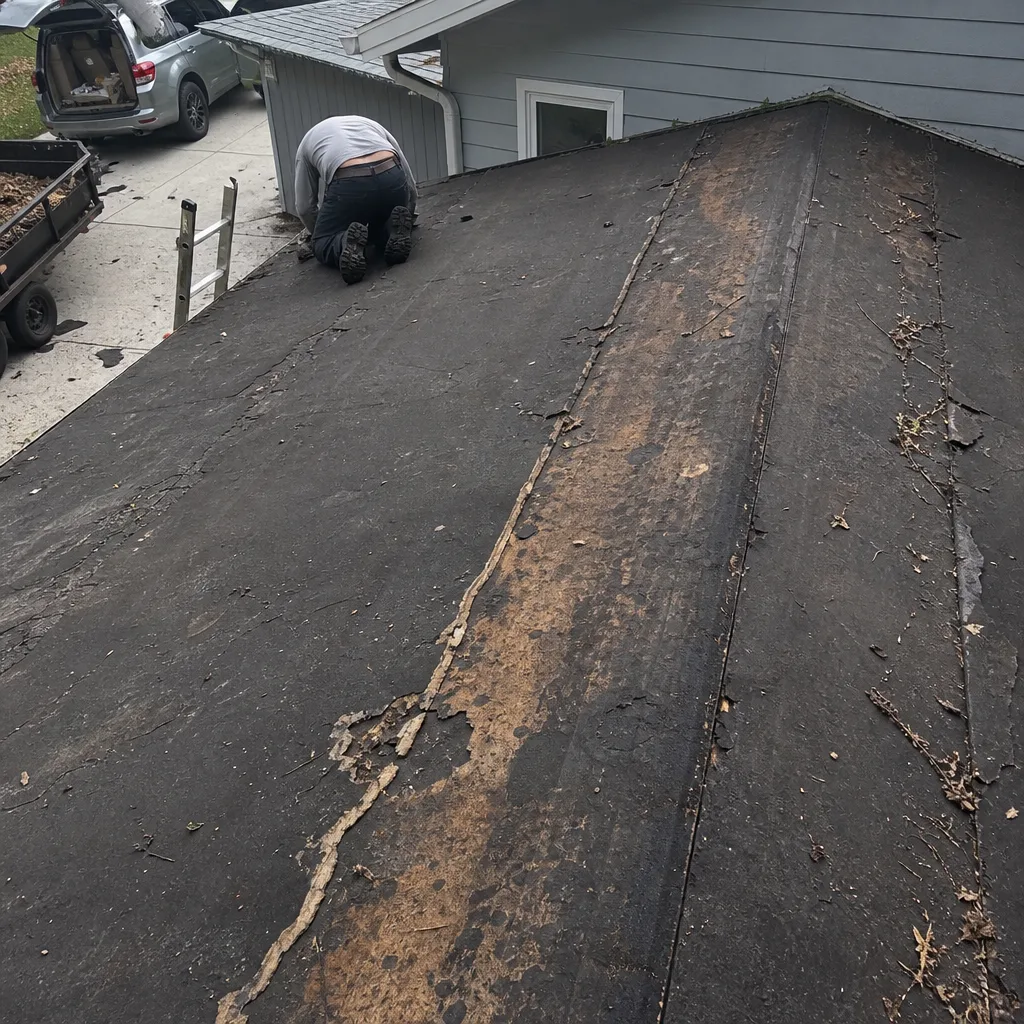 Before
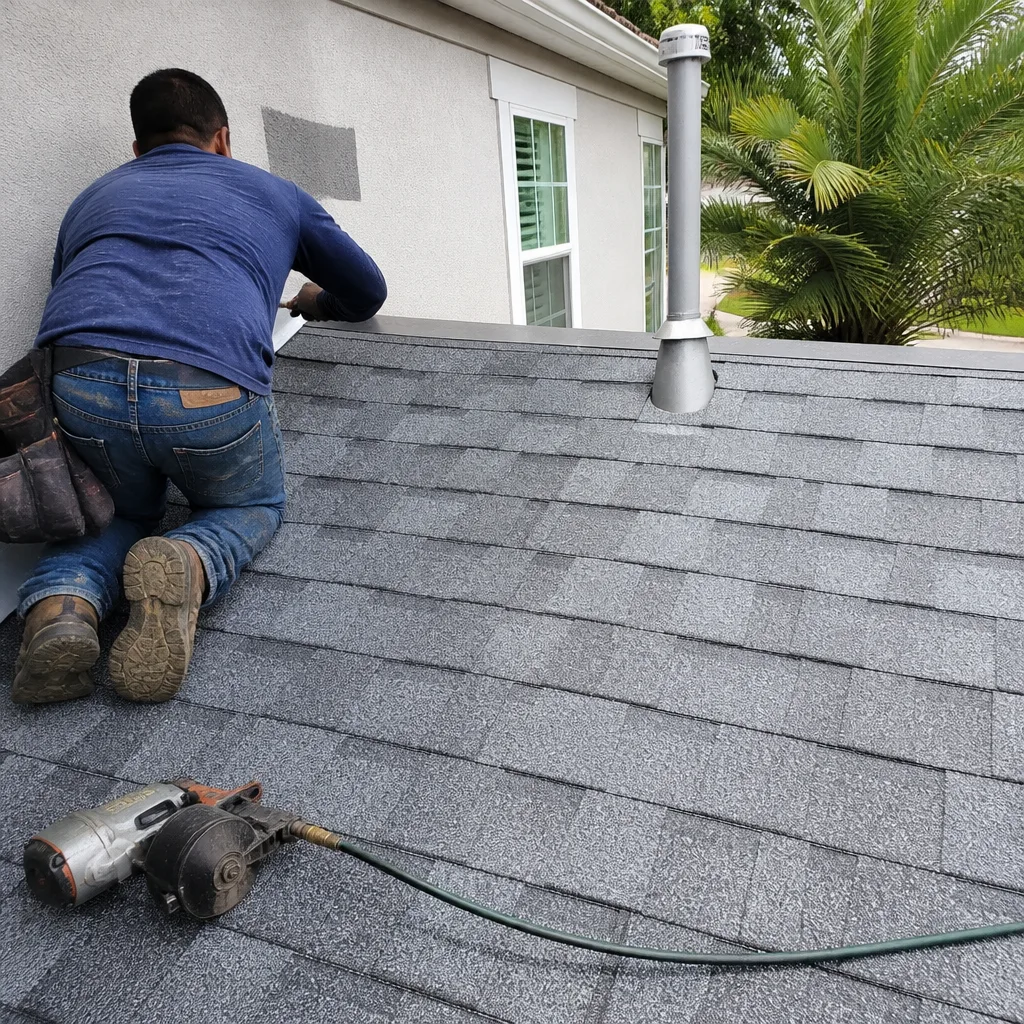 After
After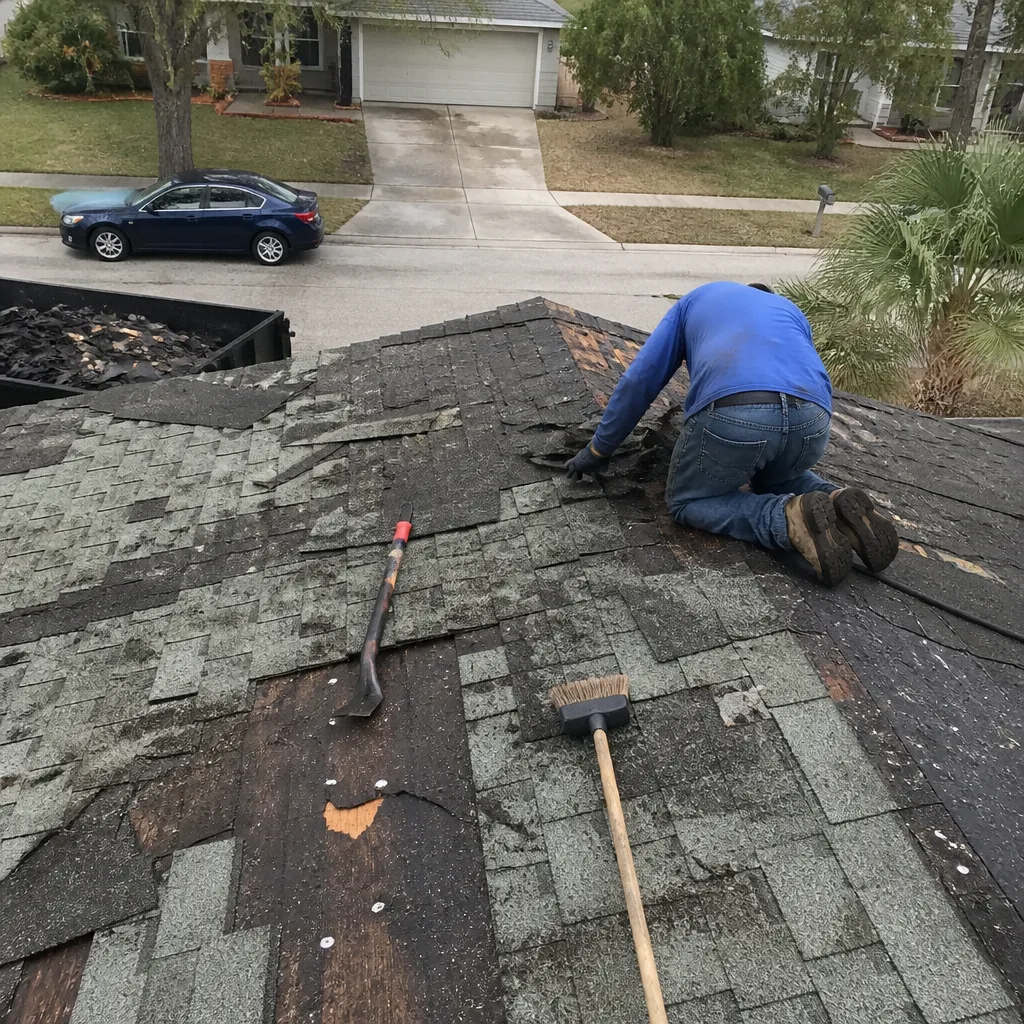 Before
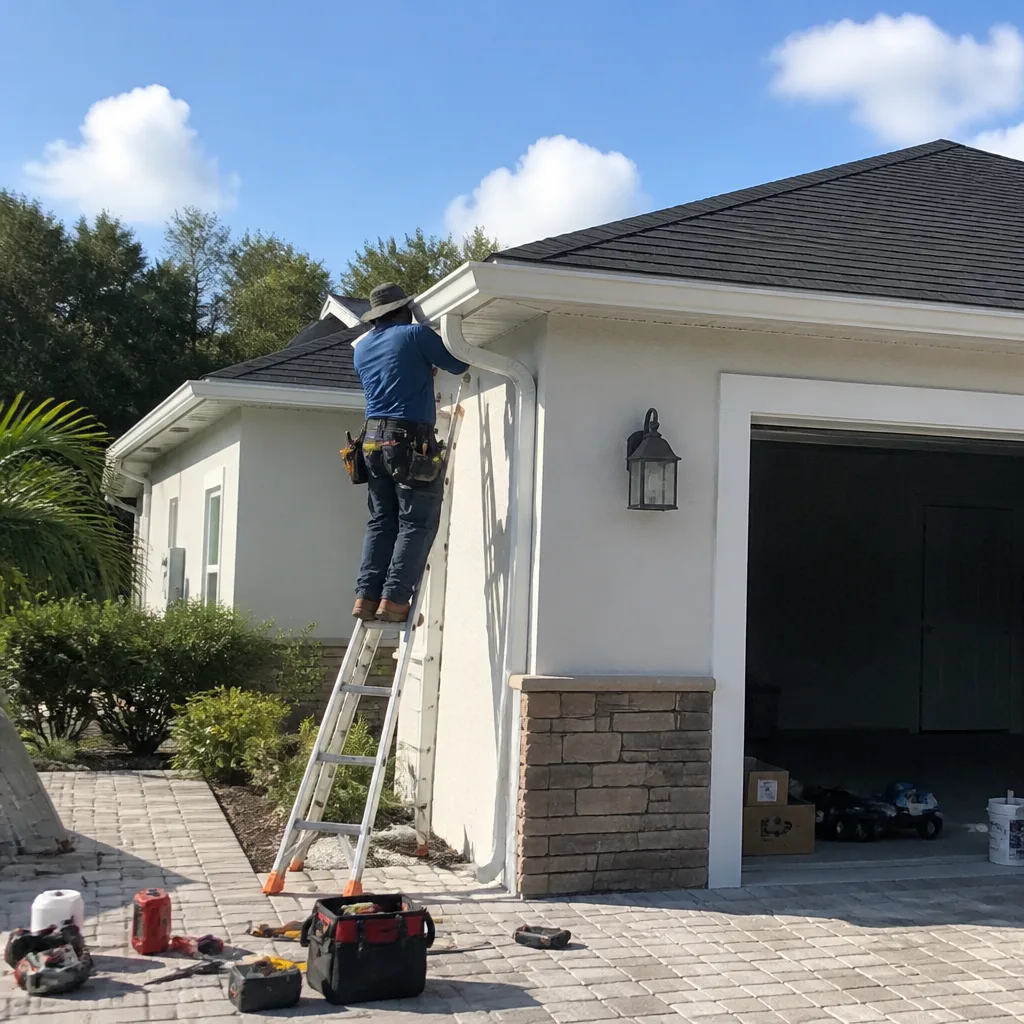 After
After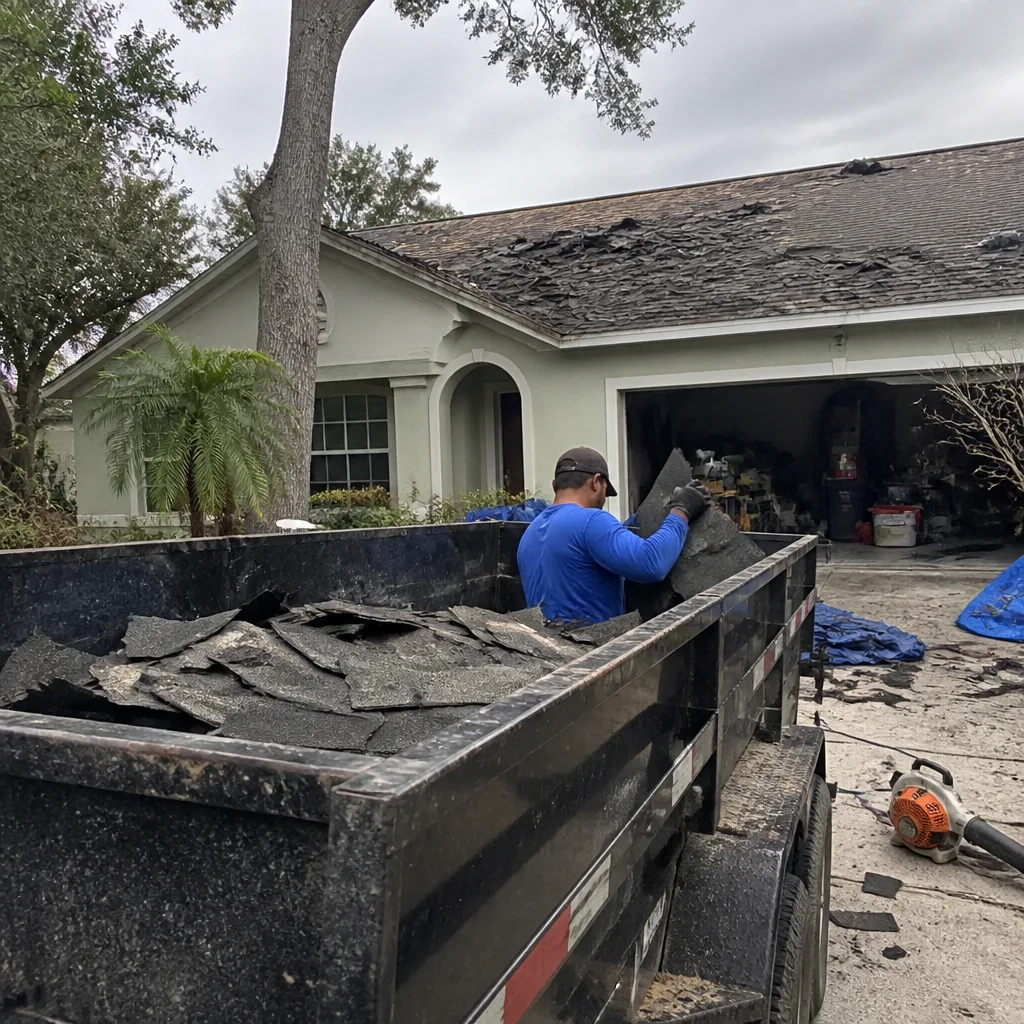 Before
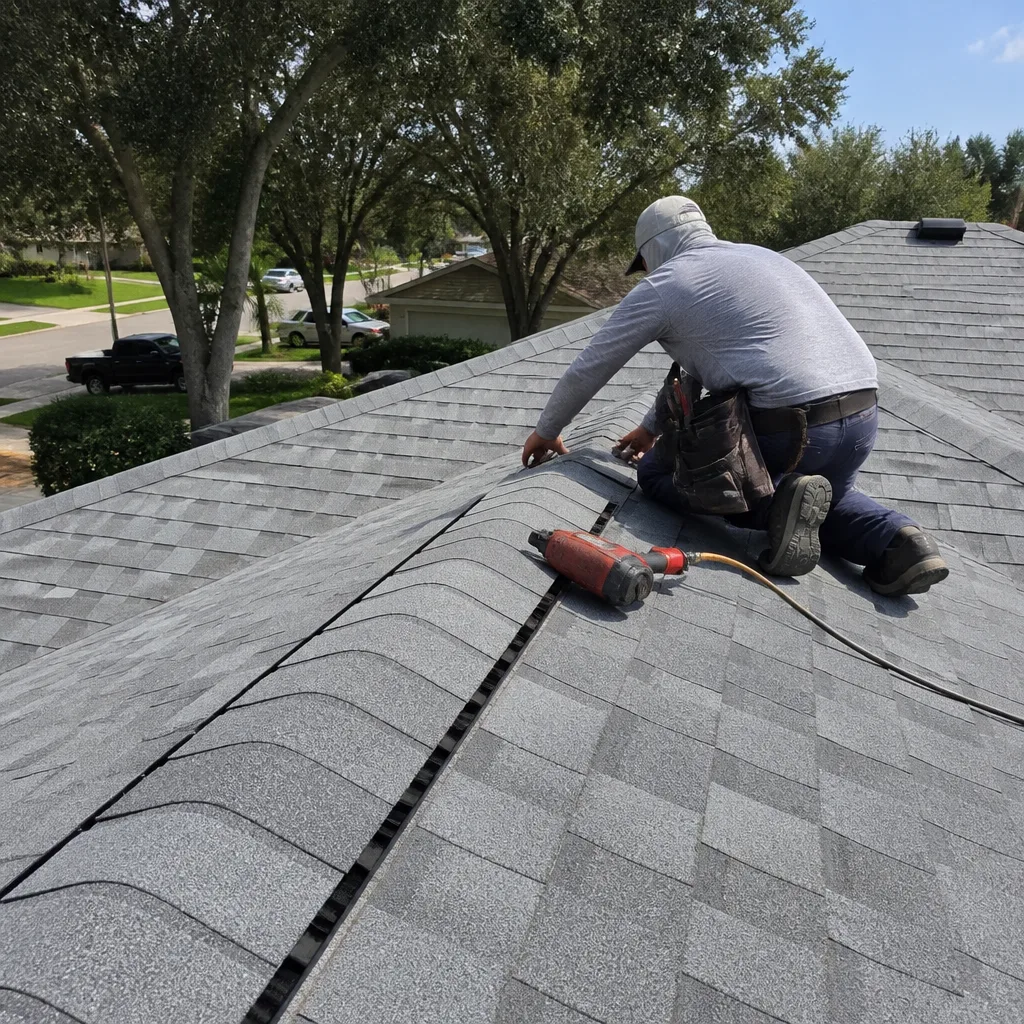 After
AfterWhen to Call a Professional
Call a roofing professional in Tampa when you see curling or lifting shingles, granule loss that leaves bald patches visible from the ground, daylight through the attic decking, water stains on interior ceilings, or flashing that has separated from the chimney or walls. After any storm with sustained winds above 50 mph, a post-storm inspection is worth the trip charge, especially if your neighbors are filing claims. If you’re buying or selling a home, a professional roof inspection gives you a documented condition report that matters in negotiation. We recommend against walking an asphalt shingle roof yourself in Tampa’s heat; the surface can reach 160°F in summer, and foot traffic on aging shingles causes the very granule loss you’re trying to assess. Brennan Roofing Co Tampa offers free estimates in Tampa. Call (850) 750-9193 to schedule one.
Frequently Asked Questions
A new architectural shingle roof for a typical 2,000 square foot Tampa home runs $9,000 to $13,000 installed, while standing seam metal runs $24,000 to $36,000 and tile runs $20,000 to $44,000. The exact cost depends on roof pitch, decking condition, and material grade. Call (850) 750-9193 for a written estimate with the full price on paper before any work starts.
Yes, any Tampa roof replacement requires a permit from the City of Tampa or Hillsborough County, and the work must pass in-progress and final inspections. The narrow repair exemption applies only to work under one roofing square (100 square feet) that does not involve structural components. A contractor who says otherwise is putting you at risk at resale and with your insurer.
A typical asphalt shingle replacement on a single-story Tampa home takes two to four days of on-site work, plus the time required for permit review and scheduling inspections. Metal and tile installations can run five to ten days depending on complexity. Permit review typically adds three to ten business days before the work begins.
Standing seam metal performs best against Tampa’s combination of high UV, standing humidity, salt air, and wind, but it costs two to three times more than architectural shingles. Architectural asphalt shingles from a NOA-rated manufacturer, installed to the full fastening schedule, are the most common and cost-effective choice for most Tampa homes.
Florida homeowner’s insurance policies cover roof replacement when the damage is caused by a covered peril, such as a named storm or falling tree, but they do not cover normal wear from Tampa’s UV and humidity. Insurers have also tightened underwriting rules in recent years, and many now require roofs over a certain age to be replaced before they’ll issue a policy at all.
Verify the contractor’s Florida state roofing license, confirm they carry general liability and workers’ compensation insurance, ask whether their technicians are employees or subcontractors, and insist on a written price before any work starts. A legitimate Tampa roofer will also pull the permit in your name without resistance and provide manufacturer product approvals for the materials they’re quoting. Brennan Roofing Co Tampa checks every one of those boxes, and every technician who arrives at your door is background-checked and in uniform.
The Bottom Line
Tampa’s roofing environment is defined by UV intensity, humidity, salt air, and wind loads that most national guides barely mention. The practical consequences are simple: materials fail faster here, permits and inspections are mandatory for anything beyond a minor repair, and the difference between a roof that lasts 15 years and one that lasts 25 comes down to underlayment quality, fastening discipline, ventilation, and the honesty of the contractor you hire. Get the price in writing before work starts. Confirm the permit. Check the fastening schedule against the NOA. And if you want a straight answer about the roof over your head, call (850) 750-9193 or start with our Brennan Roofing Co Tampa home page. The estimate is free, and the price goes on paper before any work begins.
Written by Travis Oakley, Owner at Brennan Roofing Co Tampa, serving Tampa since 2000.